
A retail brand with a solid store presence and a decent website starts noticing something odd. Competitors half their size are pulling in more repeat customers, more direct orders, and more of the kind of engagement that used to need a physical visit or a phone call. Nine times out of ten, the difference comes down to one thing: those competitors built an app, and it’s quietly doing the job of keeping customers close.
This isn’t really about chasing a trend. Mobile app development has turned into a practical way for businesses in retail, healthcare, services, and logistics to stay in front of customers who now expect to do most things from their phone. A website still matters; don’t get that wrong. But an app sits on someone’s home screen, nudges them with a notification when it’s actually relevant, and lets them get something done in a couple of taps instead of a login and three clicks. That convenience is easy to underestimate right up until you watch it work for someone else’s business instead of yours.
Why Mobile Matters More Than It Used To
A few years back, a mobile-friendly website felt like enough. That’s not really true anymore. People spend most of their phone time inside apps now, not browser tabs, and years of using banking apps, food delivery apps, and shopping apps have quietly reset what “normal” looks like for everyone.
Customers expect things to load fast, remember their preferences, and get them to whatever they came for without extra steps like checking a balance, booking a slot, or reordering something from last month. A browser can technically do all of it. It just rarely does it as smoothly, and people notice the difference even when they can’t quite put a finger on why.
For a business, that shift isn’t really optional to ignore. Attention has moved, and mobile app development is how a business actually shows up where that attention now lives, instead of standing just outside it.
How a Mobile App Supports Business Growth
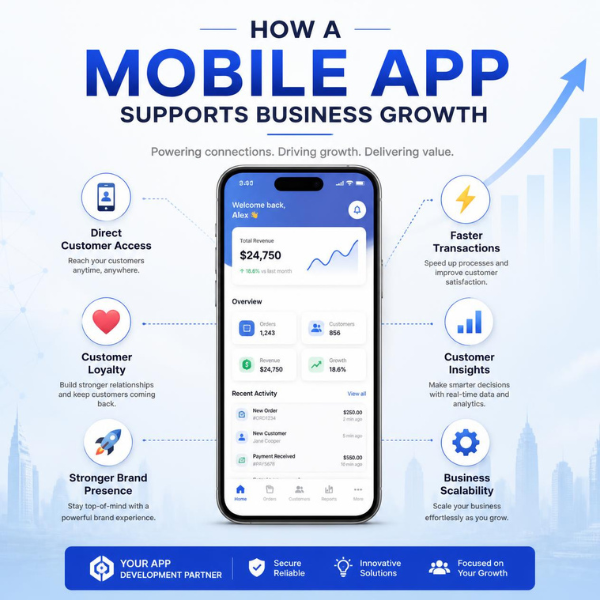
1. Direct Access to Customers
An app sits on someone’s phone whether they’re thinking about the business or not. A notification about an offer, a restock, or an appointment reminder reaches them directly, without hoping an email gets opened or an ad gets noticed. Over time, that direct line tends to be worth more than most one-off marketing spends put together.
2. Better Customer Retention
People stick with things that are easy to come back to. An app that remembers what someone ordered last time or what they’ve saved removes the annoyance of starting over from scratch every visit. That small bit of convenience is often the real, unspoken reason someone picks a familiar app over going and searching for an alternative.
3. Stronger Brand Presence
Every time someone unlocks their phone and glances past the app icon, the business gets a tiny, free moment of visibility. Nothing dramatic about it but it adds up in a way a website never manages, because nobody’s carrying a website around in their pocket all day.
4. Faster and Smoother Transactions
Whether it’s a purchase, a booking, or a service request, an app can cut down the steps between “I want this” and “done.” Saved payment details, pre-filled fields, and one-tap reordering small things, but they close off exactly the moments where someone might otherwise give up halfway through.
5. Useful Data and Insights
An app shows a business how customers actually behave, what they browse, where they drop off, and what brings them back a second time. Used well, that kind of insight leads to better decisions about products and offers, instead of guessing and hoping.
6. Room to Scale and Add Features
A well-built app isn’t a finished, fixed thing. New features, new services, and new integration can get added over time without tearing the whole thing down and starting again. That flexibility matters, because what an app needs to do in year one is almost never what it needs to do in year three.
Staying Competitive Isn’t Just About Having an App
Worth being honest here: just having an app sitting on the Play Store doesn’t automatically make a business more competitive. Plenty of apps get downloaded once, opened once, and forgotten. What actually keeps a business ahead is whether the app does its job well, loads fast, holds up under real use, solves an actual problem, and gets kept up to date as things change.
A competitor with a slower, clunkier app but a bigger marketing budget can still lose ground to a business whose app is simply easier to use day to day. This isn’t about who launched first. It’s about whose app people are still opening six months later.
What a Well-Built App Should Actually Deliver
For an app to genuinely support growth instead of just existing, a few basics need to hold up:
- Fast, reliable performance that doesn’t test anyone’s patience
- A user experience simple enough that nobody needs it explained
- Solid security around customer data and transactions
- Room to scale as the user base and feature list grow
- Clean integration with whatever the business already runs on payments, CRM, inventory
- Regular maintenance instead of a “launch it and walk away” approach
None of this is exotic or clever. It’s just the groundwork that separates an app people actually keep using from one they delete a week later.
Mobile App Development as a Long-Term Investment
It helps to think of mobile app development less as a one-off project and more as an ongoing part of running the business, a bit like how a physical store still needs upkeep long after opening day. The app that goes live on launch day is rarely the same app a business is using two or three years down the line. Features get added, systems get connected, and rough edges get smoothed out as real people start using it.
Businesses that see it this way tend to get a lot more out of the investment than the ones expecting a single build to carry them forever. The businesses actually seeing growth from their app usually aren’t the ones who built it and moved on they’re the ones still paying attention to it.
Questions to Ask Before Investing in an App
A few honest questions upfront tend to make the eventual spend worth a lot more:
- What specific problem is this app solving for our customers?
- What can we realistically build well in the first version, and what can wait?
- What existing systems does it need to talk to?
- How are we going to keep customer data secure?
- What does testing actually look like across different devices?
- Who owns updates and maintenance once it’s live?
- How will we know if the app is actually helping the business?
Skipping these rarely saves time. It just pushes the cost further down the road, usually with interest.
Mobile app development isn’t just about keeping pace with what everyone else is doing. Done properly, it gives a business a direct line to its customers, an easier way to do business with them, and room to grow without rebuilding from scratch every time something changes. What actually decides whether an app helps a business stay competitive isn’t whether it exists; it’s whether it’s built and kept up well enough to genuinely work for the people using it.
At Creatah, that’s the view we build with performance, usability, and reliability working together, so the app keeps earning its place on someone’s phone long after launch day.
Thinking about building a mobile app for your business? Get in touch with Creatah to talk through your idea, requirements, and goals with our team.
