
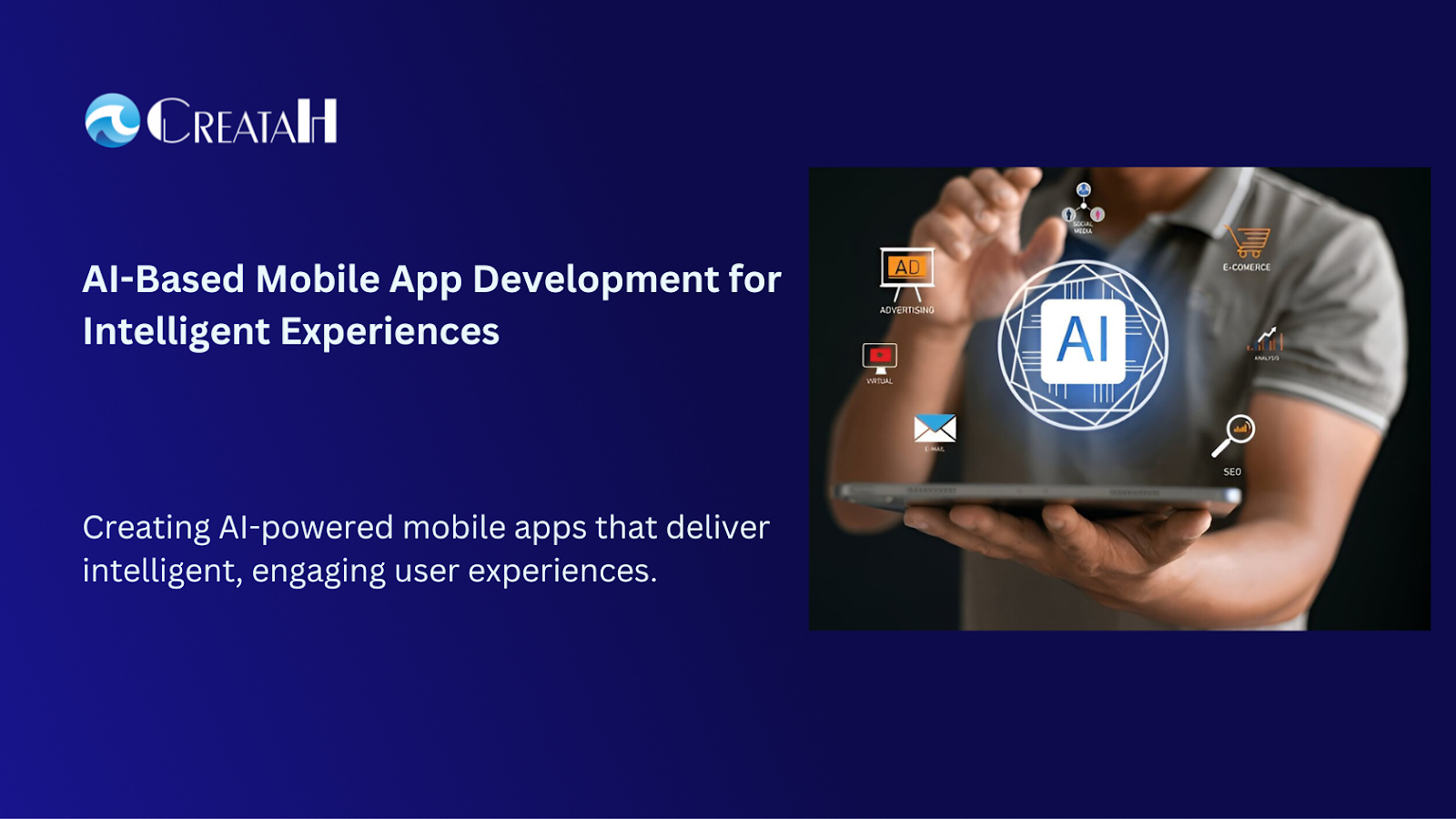
In today’s digital world, mobile apps are no longer just tools; they are experiences. Users expect apps to be fast, smart, intuitive, and personalized. Simply building a basic app is not enough anymore. Businesses now need apps that think, learn, and adapt. That’s where Artificial Intelligence (AI) steps in. At Creatah Software Technologies, we believe the future of mobile applications is not just mobile; it’s intelligent. AI-powered apps are reshaping how businesses interact with customers, automate processes, and make data-driven decisions. From smart chatbots to predictive analytics and voice recognition, AI is redefining what mobile apps can do. Let’s explore how AI-based mobile app development is changing the game and why your business should adopt it today. The Evolution of Mobile Apps: From Static to Smart A few years ago, mobile apps were simple. They displayed information or offered basic functionality. Users clicked, searched, and manually completed tasks. Today’s users expect more. They want apps that Understand their preferences Offer personalized recommendations Respond instantly Automate repetitive tasks Predict what they need next Traditional apps can’t deliver this level of intelligence. But AI-powered apps can. AI enables applications to analyze user behavior, learn from patterns, and continuously improve. This creates a seamless and smart experience that feels almost human. At Creatah Software Technologies, we help businesses move from static applications to smart ecosystems. What is AI-Based Mobile App Development? AI-based mobile app development means integrating machine learning, natural language processing, computer vision, and data analytics into mobile applications. In simple words, instead of just following commands, the app starts thinking on its own. For example: A shopping app suggests products based on your past purchases A healthcare app predicts health risks A banking app detects fraud instantly A chatbot answers customer queries 24/7 A fitness app creates personalized workout plans These are not future concepts. They’re happening right now. And businesses that adopt AI early gain a massive competitive advantage. Why Businesses Need AI-Powered Mobile Apps 1. Personalized User Experience Customers love personalization. When an app understands their needs, they stay longer and engage more. AI helps apps: Recommend products Show relevant content Customize notifications Understand behavior patterns This leads to higher customer satisfaction and loyalty. At Creatah, we design apps that don’t just serve users; they understand them. 2. Automation & Efficiency AI reduces manual work by automating repetitive tasks like Customer support Data entry Order tracking Appointment scheduling Chatbots and virtual assistants can handle thousands of queries simultaneously. Result? Lower operational costs + faster service + happier customers. 3. Smart Decision Making Data is everywhere, but without intelligence, it’s useless. AI helps businesses: Analyze large datasets Predict trends Understand customer behavior Make real-time decisions This gives companies the power to act proactively instead of reactively. At Creatah Software Technologies, we integrate advanced analytics dashboards so businesses can see insights clearly and make smarter strategies. 4. Enhanced Security Cyber threats are increasing daily. Traditional security methods often fail. AI-based apps can: Detect suspicious activities Identify fraud patterns Monitor abnormal behavior Provide biometric authentication This ensures stronger security and safer user experiences. Real-World AI Features We Build at Creatah We don’t just talk about AI; we build it into practical solutions. Here are some powerful AI capabilities we implement: 🔹 Chatbots & Virtual Assistants 24/7 automated customer support that feels human and responsive. 🔹 Recommendation Engines Smart suggestions for eCommerce, OTT, and learning platforms. 🔹 Predictive Analytics Forecasting sales, demand, and user behavior using historical data. 🔹 Voice Recognition Voice search and commands for accessibility and convenience. 🔹 Image & Face Recognition Used in security apps, healthcare, and retail solutions. 🔹 Sentiment Analysis Understanding customer feedback and emotions to improve service. These features transform ordinary apps into intelligent digital companions. Industries Benefiting from AI Mobile Apps AI isn’t limited to tech companies. Every industry can benefit. Healthcare Remote patient monitoring Health prediction systems AI diagnosis support E-Commerce Personalized shopping Smart recommendations Inventory forecasting Education Adaptive learning apps AI tutors Performance tracking Finance Fraud detection Smart investment tools Automated banking Logistics Route optimization Delivery predictions Fleet management At Creatah Software Technologies, we tailor AI solutions based on the specific needs of each industry, not generic templates. Our Approach at Creatah Software Technologies What makes us different? We don’t just build apps; we build intelligent solutions with purpose. Step 1: Understand Your Vision We listen first. Every business is unique, and so are its challenges. Step 2: Strategy & AI Planning We identify where AI can add real value, not just trends. Step 3: Design & Development User-friendly interfaces combined with powerful AI engines. Step 4: Testing & Optimization Continuous learning models that improve performance over time. Step 5: Support & Scaling We grow with you as your business expands. Our focus is always on creating apps that are: ✔ Smart ✔ Scalable ✔ Secure ✔ Future-ready Why Choose Creatah Software Technologies? Many companies build apps. Few build intelligent digital experiences. Here’s why clients trust us: Experienced AI & mobile development team Customized solutions (no copy-paste models) Latest technologies & frameworks Affordable and scalable development Dedicated post-launch support Strong focus on innovation We combine technology + creativity + business strategy to deliver apps that truly make an impact The future is intelligent. Are You Ready? AI is no longer optional. It’s becoming the foundation of modern applications. Businesses that adopt AI today will lead tomorrow. Those who delay may struggle to keep up. Your customers already expect smart experiences. The question is, are you ready to deliver them? At Creatah Software Technologies, we’re passionate about helping businesses transform ideas into intelligent mobile applications that drive growth, efficiency, and success. Let’s Build Something Smart Together Whether you’re a startup with a fresh idea or an enterprise looking to upgrade your existing app, we’re here to help. Let’s create mobile applications that don’t just function but think, learn, and evolve. Creatah Software Technologies: Turning Innovation into Intelligent Solutions.

AI Mobile App Development: Building Intelligent, Scalable, and Human-Centric Mobile Experiences The Shift from Mobile Apps to Intelligent Products Mobile apps are no longer just digital tools. They are fast becoming intelligent products that learn, adapt, and respond to users in real time. This shift is powered by Artificial Intelligence (AI), which is redefining how mobile applications are designed, built, and experienced. Traditional mobile apps follow predefined rules. They do exactly what they are programmed to do—nothing more, nothing less. AI-powered mobile apps, on the other hand, can: Understand user behavior Adapt interfaces and flows dynamically Make predictions based on historical data Improve performance and personalization over time This evolution is not about adding flashy features. It is about creating apps that think, learn, and evolve alongside users. Why AI Is Becoming Central to Mobile App Development Several real-world factors are accelerating AI adoption in mobile apps: User expectations have changed Users expect apps to “know” them, recommend the right content, respond instantly, and reduce friction at every step. Data availability has exploded Mobile apps generate massive volumes of behavioral data. AI turns this raw data into actionable intelligence. Competitive pressure In crowded app markets, AI-driven personalization and automation are no longer differentiators; they are survival tools. Advancements in AI frameworks Cloud-based AI services, edge AI, and on-device machine learning have made AI more accessible and scalable than ever. What Makes an AI Mobile App Different An AI mobile app typically includes one or more of the following intelligence layers: Learning layer – models that improve based on usage patterns Prediction layer – anticipating user needs or outcomes Decision layer – automating actions without manual input Adaptation layer – changing UI, content, or workflows dynamically This intelligence can operate quietly in the background or be directly visible to the user, such as recommendations, voice assistants, or real-time feedback. Core Components of AI Mobile App Development Building an AI-powered mobile app is not just about writing code. It requires a thoughtful blend of data strategy, model selection, system architecture, and user experience design. 1. Data Strategy: The Foundation of Intelligence AI is only as good as the data it learns from. A strong AI mobile app begins with a clear data strategy: What data will be collected? How frequently will it be updated? How will privacy and consent be handled? How will data quality be maintained? Effective AI apps focus on relevant, clean, and ethical data, rather than collecting everything indiscriminately. 2. AI Model Selection and Training Different use cases require different AI approaches: Rule-assisted ML for guided automation Supervised learning for predictions and classifications Unsupervised learning for behavior discovery Generative models for content, audio, or text creation The key is not complexity but alignment with the app’s real-world purpose. 3. Mobile + AI Architecture Modern AI mobile apps usually follow a hybrid architecture: On-device AI for speed, privacy, and offline use Cloud-based AI for heavy processing and model updates Real-time APIs for inference and personalization A well-designed architecture ensures: Low latency Scalability Secure data flow Seamless updates without app reinstalls 4. UX for Intelligent Apps AI should reduce effort, not add confusion. Human-centric AI UX focuses on: Clear feedback loops Explainable decisions (why something was recommended) Graceful failure handling Control and transparency for users The best AI feels invisible; it simply makes the app feel smarter and easier to use. Real-World Use Cases of AI in Mobile Apps AI mobile app development is already transforming multiple industries. The impact is practical, measurable, and user-driven. 1. Healthcare and Wellness Apps AI enables: Symptom analysis and triage Personalized fitness and nutrition plans Mental health monitoring Predictive health alerts Mobile apps can now act as intelligent health companions rather than static trackers. 2. Fintech and Payments AI powers: Fraud detection in real time Personalized financial insights Credit risk analysis Smart budgeting assistants These features build trust while reducing operational risk. 3. E-commerce and Retail AI transforms shopping experiences through: Product recommendations Visual search Demand forecasting Dynamic pricing The result is higher conversion rates and improved customer retention. 4. Education and Skill Development AI-driven learning apps adapt to: Individual learning pace Knowledge gaps Engagement levels This creates personalized education journeys that scale globally. 5. Media, Content, and Entertainment AI helps: Curate content feeds Generate summaries and highlights Enhance audio and video experiences Predict user preferences Content becomes more relevant, timely, and engaging. Challenges, Ethics, and the Future of AI Mobile Apps Key Challenges in AI Mobile App Development Despite its potential, AI comes with real challenges: Data privacy and security Handling sensitive user data responsibly is non-negotiable. Bias and fairness AI models can unintentionally reinforce bias if not monitored carefully. Performance constraints Mobile devices have limited processing power and battery life. Model maintenance AI systems require continuous monitoring, retraining, and optimization. Addressing these challenges early leads to more trustworthy and sustainable products. Ethical and Responsible AI Design Responsible AI mobile app development focuses on: Transparency in AI decisions User consent and control Fair and unbiased outcomes Clear boundaries between automation and human choice Trust is the true currency of AI-powered products. The Future of AI Mobile App Development The next phase of AI mobile apps will move beyond features toward AI-native products, where intelligence is built into the core: Voice-first and multimodal interfaces Emotion-aware and context-aware apps Real-time personalization at scale Deeper integration with hardware sensors AI will not replace mobile app development; it will redefine it. AI mobile app development is not about chasing trends. It is about building applications that genuinely understand users, adapt to their needs, and deliver long-term value. The most successful AI apps will be those that balance intelligence with empathy, automation with transparency, and innovation with responsibility. When built thoughtfully, AI-powered mobile apps don’t just serve users; they grow with them. At Creatah, we blend creativity with strategy to deliver compelling digital experiences that drive results—partner with us and transform your ideas into impact.
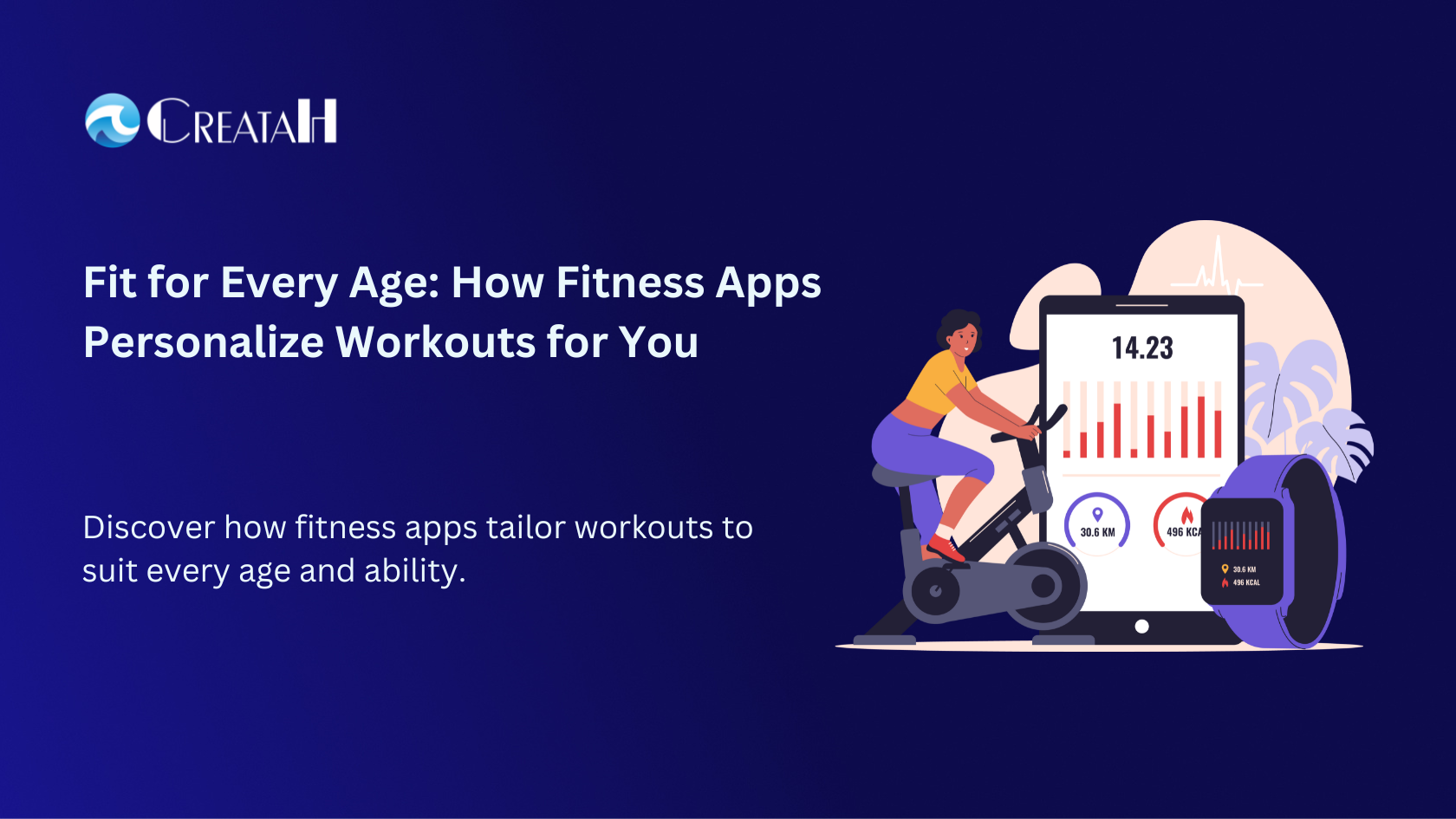
How Fitness Apps Are Customizing Workouts for Different Age Groups Fitness apps have dramatically evolved the way people view and manage health and fitness, enabling a convenient, flexible, and personalized way to live healthy and active lives. One of the more exciting new innovations of fitness apps has been the creation of workouts designed for different age groups. The intention of these applications is that fitness needs are recognized as changing as a person ages and thus have been programmed for a specific audience with their physical skills and limitations in mind with the goal of enabling enjoyable, safe, and effective workouts for different age groups. Customized Workouts for Young Adults (ages 18-35) For young adult populations, fitness apps tend to concentrate on high-intensity workouts and strength training, and cardiovascular workouts to improve endurance, strength, and muscular definition. Generally, the fitness app will include an individual fitness plan specially customized to the individual user based on their fitness goals, i.e., developing muscularity, appropriate weight loss, or improved fitness. Tailored Workouts. With tailored workouts, fitness apps can utilize and integrate sophisticated algorithms that will enable users to develop a series of workout plans based on their fitness levels, goals, and/or interest. For example, if you search for strength-training exercises in a fitness app, the app could provide multiple complex exercises that include weight lifting, high-intensity interval training (HIIT), and/or aerobics, including dance-based workouts. Progressive Challenges: The fitness app can include functions, such as, streaks, badges and/or progress functions that will challenge younger users to progress further in their workouts. Interactive Features: There are even numerous fitness apps that include live classes, social challenges, and/or gamification elements to promote engagement and fun for the younger adult user. Fitness for Middle Aged Adults (36-50) When users reach sophisticated years, specifically starting in their 40s and 50s, their fitness needs will change. Fitness applications for this age group emphasize joint protection, muscle retention, and flexibility. Generally, workouts that these apps provide for this audience are low impact but still designed to improve strength, mobility, and cardiovascular health. Low impact options: For this demographic, fitness applications have a greater variety of low-impact exercise options such as yoga, pilates, or swimming workouts to prevent joint stressing while preserving strength and flexibility. Recovery focused workouts: Many fitness apps also provide routines marketed specifically towards recovery, stretches, and improving posture, all of which are an important part of fitness for a middle-aged audience. Health monitoring: Through technology and devices, apps also can monitor heart rate, quality of sleep, or stress to keep middle-aged adults healthy and balanced. Teens to Adults (Age 18 – 50) For young and middle aged adults, fitness apps are targeted towards the maintenance of mobility, prevention of falls, improved balance, and overall health. Workouts are very gentle on their bodies, but still improve strength, flexibility, and endurance. Gentle safe workouts: Fitness apps for older adults have low impact exercise options that are light on the joints such as walking, stretching, and body weight exercises. Fitness apps will also have balance and coordination exercises, which are necessary to minimize fall risk. Guided movement and cues: Most fitness apps give step-by-step instructions with audio/visual cues to help an older adult exercise without risk of injury while still working the right muscle groups. Health integration: Fitness applications for older adults will integrate health monitoring devices, heart rate monitors or pedometers, to ensure the user does not exceed their safe workout limits. Advantages of Specific Fitness Programming for Each Age Cohort The major advantage of programming workouts specific to age cohorts is that they provide appropriate challenges for each group, improving physical health outcomes while minimizing injury risks. Youth benefit from higher-intensity workouts that build muscle mass and endurance. Middle-aged adults gain more from routines that emphasize joint health, flexibility, and recovery. Older adults need exercises that maintain mobility and overall health without stressing the body or increasing fall risk. Fitness apps are no longer a one-size-fits-all solution—they are evolving to meet the unique needs of different age groups. By tailoring workout plans for younger users, middle-aged adults, and older adults, these apps empower people to stay fit, healthy, and active at every stage of life. Behind this evolution is mobile app development, which plays a crucial role in integrating personalized features, adaptive workout plans, and age-specific tracking capabilities. With the right development approach, fitness apps can deliver inclusive, safe, and effective fitness journeys for users across generations. Whether the goals are strength, flexibility, or fall prevention, fitness apps are providing the resources to help users achieve fitness without injury. As fitness apps continue to improve, the programs will be important to help people stay active and healthy as they age through life. Creatah provides tailored app development solutions to fitness businesses that want to introduce customized fitness experiences in their fitness applications. Contact us today to learn how we can help you create an engaging fitness app with customized features for all age groups.

Promoting or owning a gym doesn’t just mean pumping iron and pushing out workouts; it consists mostly of directing people, assuring quality, and remaining relevant as the fitness landscape evolves and morphs faster than we could dream of. No matter if you’re an expert gym owner or an amateur starting your journey, you’re in for a journey of confusion and headaches, with your patience, plan, and adaptation tested like it wouldn’t, and some very strange hurdles thrown at you. Let’s take a look at the biggest hurdles gym owners face, and what you can do to get past them. 1. Member Retention Is Harder Than Acquisition You could be getting new members every week- but can you keep them month after month? That is where most gyms face their biggest struggles. Why it happens: Members lose motivation or stop seeing results Lack of personalization or follow-up Boring or repetitive workout routines No engagement outside the gym floor What can help: Introduce habit-building programs or milestone tracking Offer digital touchpoints (like progress-tracking apps) Create community-driven events or challenges Send personalized nudges based on user behavior Retention is not about having the best equipment, it’s about building the best habits. 2. Scaling Operations Without Losing Quality As a gym grows, so do the career duties. Hiring staff, balancing schedules, holding classes, and providing the same gym experience everywhere are all balancing acts that are hard to manage with ease of mind. Common scaling struggles: Training staff to deliver the training experience that reinforces that value of your brand. Making sure that the client experience is the same across branches. Efficiently managing schedules, payments, and feedback. Scaling naturally without possible systems of technology is leading to burnout. Possible solutions: Automate admin work (schedules, feedback, payments) Develop SOP (standard operating procedures) for trainers and front-desk work. Purchase a gym management system to control all this information. Use technology to roll out a consistent onboarding experience for members and communication. 3. High Competition in Local and Online Markets Fitness is a cash cow and everyone wants to get involved. You are competing with more than just your neighbor gym; you are competing with YouTube workouts, personal trainers, and fitness apps. What makes it challenging: Clients expect to get more value with less cash Fitness apps provide cheap, flexible options; New boutique studios are creating niche spaces (Zumba, CrossFit, Yoga) Standing out is hard How to stand out: Figure out what you do best and dive deep into it (ex. strength training for women 40+) Create a digital footprint through social proof (client reviews/stories, reels) Create a hybrid experience that combines both in-gym and at-home elements 4. Technology Gaps Hurt Member Experience In modern-day society, if your gym operates with Excel sheets and WhatsApp messages, you are already behind. Tech-related challenges faced by gym owners: Manual bookings and cancellations A lack of real-time view of member activity and feedback Payment, scheduling, and performance tracking all exist in their own silos No digital ecosystem to engage members outside the gym environment What to do: Provide an app for your members (class bookings, performance logs, trainer access). Use analytics (data) to track attendance trends and drop-offs. Use smart devices, wearables, digital kiosks, etc to track performance. Communicate based on behaviour (personal). Remember: Your members are used to Netflix, Amazon, and Zomato. They expect seamless, personalized tech-enabled experiences everywhere, including fitness. 5. Burnout and Founder Overwhelm The successful gym has a founder who works at least 14 hours a day, and does a hundred different roles. Customer service, employee payroll, fixing leaks. You do it all. Why it’s dangerous: No work-life balance, you are no longer prioritizing health! Critical, strategic work gets pushed because of daily operational demands. You don’t have time for creative growth or innovation. Stress has you making poor decisions. Smart ways to reduce the load: Use tech and systems to delegate repetitive work. Train a team that you can trust. Just like client sessions, make sure you set aside time for your own downtime or learning time. Outsource important parts of development, marketing, or back-end operations if necessary. You started this journey to promote health, which includes yours too. Build Smarter, Grow Faster These are just some of the common challenges gym owners face, and although every gym owner’s journey is different, the solutions usually revolve around three things: systems, strategy, and support. At Creatah, we work with gym owners like you to build custom mobile apps and digital ecosystems that drive retention, streamline operations, and elevate member experiences without the tech overwhelm. If you’re ready to turn your gym into a high-retention tech brand that your members love coming back to… Contact Creatah – Let’s brainstorm your next growth move.

Why 90% of Fitness Studios Struggle with Member Retention Starting a fitness studio can be exhilarating. You have the furniture, the instructors, new member sign-ups streaming in, and success is rolling in. Then comes the tough part: retaining members and keeping them engaged long-term. According to recent industry reports, nearly 90% of fitness studios struggle with member retention issues on a continuous basis. For every ten people who join, only one may stay longer than a few months. If you’re a studio owner, you know that member dropout is neither fun nor profitable, and it can be frustrating as well. So, why is Fitness Studio Member Retention a widespread problem? This article will examine some of the main contributing factors and how you can be the exception. 1. Lack of Personalization in Member Experience Today’s fitness clients expect a wide range of goods and services equipment to be used, mats to work on, and programs they can easily jive with according to their fitness goals, body types, and preferences. However, many studios are still behaving in a one-size-fits-all approach, they offer the same group class or the same routine for everyone. In most cases, the individual who could engage in either class or work out is becoming disconnected and bored. When members do not feel as though they matter and are not supported in the goals they joined to achieve, they are inclined to become disengaged and look for alternatives. 2. No Progress Tracking = No Motivation Everyone comes into your studio hoping to see results, but they lose motivation about progress fast when they can’t see it. The sad reality; most fitness studios don’t have a system in place to report progress. There’s no digital log, no quantifiable metrics, and no regular check-ins. When they have no way of tracking their transformation, they assume it’s not happening. Tip:Just having an app feature that displays personal bests, how many days in a row they’ve come to your studio, or how much their body scan changes each month would keep your retention levels significantly higher. 3. Poor Communication & Follow-Up Retention begins to drop off when the communication stops after the signup. Most studios do an exceptional onboarding process but then fail to realize that onboarding takes nurturing afterwards. Clients often feel ignored or unvalued as soon as they have paid. Are you checking in with members who haven’t shown up in a week? Are you sending reminders for classes they liked? Are you sharing content that keeps them inspired? If you are saying no to either of these three chances are, you’re silently ushering them out the door. 4. Lack of Community Feel People join fitness programs for a sense of belonging. Gyms without a true sense of community where members know each other, share celebrations, and participate in friendly competitions have high dropout rates. Members want more than a place to work out. They want a place to belong. 5. Outdated or Overwhelming Tech Strangely enough, too many options, or the wrong kind of options, can discourage people from returning. Technologies that are cumbersome to use, crash frequently, or offer generic automation, only serve to annoy members instead of gain their loyalty. Today’s users expect a seamless experience from all online technologies and mobile-first, not something that feels from a decade ago. 6. No Clear Retention Strategy Many fitness studio owners are so focused on acquisition leads to financial success that they forget an equally, if not more, important part of fitness studio ownership: retention. Without a member retention strategy, you’re a spinning wheel with no chance of moving or turning. Your company requires a robust retention system! From reward loyalty programs to milestone celebrations to in-app reminders to members, your business should have a comprehensive member retention system designed to retain members (not just get them in the door). Signs You Might Have a Retention Problem Drop-off in attendance after 30 days High volume of single-month memberships Low class fill rates despite large member base Complaints about lack of follow-up Fewer referrals from existing clients If you’re seeing even two of these signs, it’s time to revisit your member experience strategy. What You Can Do Right Now to Improve Fitness Studio Member Retention These are some quick wins that will instantly enhance retention this month: Introduce Progress Visualization – Display a client’s milestones, streaks or fitness stats on a simple app dashboard. Automated Check-Ins – When a member’s been absent for 7 days, send them a warm human message. This is significant. Gamify the Experience – Leverage points, prizes or challenges to promote consistency and commitment to taking classes. Build a Community Loop – Can include private WhatsApp/ Discord groups, member spotlights, birthday shout-outs etc. Simplify Booking and Access – A member should be able to book/ cancel/ reschedule a class in 2 taps or fewer. Offer Flexible Memberships – Keep options open for example, virtual sessions, hybrid, the ability to pause memberships all build trust. In-App Feedback Loops – Allow your clients to provide micro-feedback after they complete a session. A simple thumbs up / thumbs down is enough not to understand trends. It’s Not a Gym Problem It’s a System Problem Retention isn’t just about pushing harder; it’s about listening better. When fitness studio Member Retention is improved it’s because systems, communication, and the client experience are in alignment. If your members can see progress, feel convenience, and feel care, they are going to stay. If your members feel lost in the crowd or disconnected from their results, it does not matter how good your trainers are, they are going to leave. Let Creatah Help You Build for Retention Creatah helps build custom mobile solutions for fitness studios with retention-first thinking in mind. Whether it is progress tracking, scheduling, habit loops, or engagement features, our apps help you to reduce churn, increase lifetime value, and create member delight, all without any additional work on your team’s behalf. Would you like to see how an app

Boosting Staff Morale in Healthcare: Can a Meditation App Make a Difference? Healthcare professionals are the foundation of our healthcare system. However, they also happen to be some of the most overworked and emotionally burdened employees in any workforce. Long shifts, life-altering decisions, and persistent exposure to trauma can significantly increase levels of stress, burnout, and emotional exhaustion. The healthcare workers’ mental and emotional well-being should not be swept to the side because they are responsible for taking care of everyone else. In recent years, there has been a heightened interest in implementing mindfulness practices and mental well-being opportunities in healthcare organizations. However, one specific solution is developing to be both scalable and personal meditation apps for healthcare professionals. Can these options actually affect employee morale, retention and wellbeing? Let’s assess. The Mental Health Crisis Among Healthcare Workers Before diving into solutions, we need to acknowledge the severity of the issue: Burnout is affecting 40-60% of healthcare professionals, especially nurses and physicians. The World Health Organization classified burnout as an occupational phenomenon, citing chronic workplace stress. According to a Medscape report, 47% of physicians say they feel burned out, and 15% say they feel depressed. Low morale doesn’t just affect individual workers it impacts patient care, team collaboration, and hospital efficiency. Why Meditation Works: The Science Behind It Meditation is not a trend, it’s a science-backed method to reduce stress and enhance emotional regulation. In high-stress environments like hospitals and clinics, meditation can help staff regain calm, mental clarity, and resilience. Proven Benefits of Meditation: Reduces cortisol levels, the stress hormone Enhances focus and attention span Improves sleep quality Boosts emotional resilience Increases empathy and emotional intelligence For healthcare professionals, these benefits are not luxuries, they’re essentials. The Case for a Meditation App for Healthcare Staff Traditional meditation sessions (like in-person workshops) are limited by time and scheduling conflicts. In contrast, a meditation app for healthcare staff is: On-demand – available 24/7 for night shifts or during short breaks Private – users can explore mindfulness at their own pace Personalized – content can be tailored to mood, energy level, or shift type Scalable – supports 10 or 10,000 employees with no extra HR load With smartphones now as essential as stethoscopes in hospitals, delivering wellness through an app is a smart, seamless move. Key Features to Look for in a Healthcare-Focused Meditation App To truly uplift morale, the app must be more than just a generic meditation playlist. Here’s what actually matters: Healthcare-Centric Content Short meditations tailored to shift changes, grief recovery, post-patient stress, etc. Guided breathing for code-blue recovery moments or emotional debriefs Micro-Mindfulness Sessions 2 to 5-minute quick resets for use between patients or in break rooms Mood Tracking & Emotional Check-ins Allows staff to reflect and self-regulate without judgment Group Meditation & Community Features Supports team bonding and collective well-being in departments Analytics for Admins (HR/Wellness Managers) Measure adoption, usage, and impact (without compromising privacy) Real-World Impact: What Hospitals Are Seeing Early adopters of meditation apps in healthcare are already reporting encouraging results: A New York hospital using a meditation app saw a 35% drop in self-reported stress levels among nurses within 8 weeks. A California-based private clinic noticed reduced absenteeism and better peer collaboration after a mindfulness program was introduced. A UK-based mental health center deployed a wellness app and reported improved staff morale and retention. When implemented thoughtfully, meditation apps aren’t just “nice to have” they become part of a hospital’s operational health strategy. Implementing a Meditation App for Your Healthcare Team: Steps to Start If you’re considering a meditation app for healthcare staff, here’s how to roll it out effectively: Choose a solution built for healthcare settings Avoid generic apps. Look for platforms that understand the emotional nuances of healthcare work. Involve staff early Get input from nurses, therapists, doctors. Co-creation builds buy-in. Start with a pilot Roll out to one department (e.g., ER or ICU) and gather feedback. Integrate with existing HR wellness programs Position it as a benefit, not another task. 5 Celebrate and normalize usage Encourage team leads to promote app check-ins during shift transitions. Meditation Is Not a Luxury It’s a Lifeline The healthcare industry cannot continue to turn a blind eye to the emotional wellbeing of its employees. Stress, burnout, and low morale does not equate failure it represents a systemic issue that necessitates systemic solutions. A meditation app for healthcare professionals is not a magic cure and should not be and is not intended to be, a standalone solution. That said, it is an excellent high impact, low barrier route to cultivating calm, connection and clarity amongst overworked healthcare professionals. At Creatah, we specialize in developing personalized wellbeing and meditation apps for healthcare organizations. Tailored shift-based user experience, therapist integrated scheduling, community mood analytics, personalized mood diaries,- are all elements that we slipped into the workflows and processes of our platforms. We are committed to serving the people who care for everyone else.

How Meditation Apps Are Transforming Employee Mental Health in High-Stress Work Environments In a hyper connected corporate environment focused on performance, there is often little room for making the mental health of employees a priority. Workers contend with seemingly endless deadlines, meetings, and obligations, leaving little room for focusing on their mental wellness. While the pressures get greater, an evolution of sorts is taking place under the radar. Meditation apps for employee mental health and well-being are emerging as a strong option for organizations trying to provide employee assistance, relieve organizational stress, reduce burnout, and foster an internal culture of wellness. These digital wellness platforms are no longer pools of opportunity and niche wellness tools. They are becoming essential workplace companions that offer on demand stress relief, emotional support, and mindfulness practices that integrate, even into the busiest of existing calendars. The Modern Workplace Stress Crisis Studies have shown that: Over 83% of US workers report suffering from work-related stress. Nearly 1 in 4 employees feel that their job is the number one stressor in their lives. Chronic stress is linked to burnout, anxiety, depression, and even physical illnesses. Traditional corporate wellness programming is often slow to adopt holistic approaches to addressing the deeply rooted mental health issues workers face today. Gym memberships, while sometimes a default mental wellness offering, and one time workshops are not the answer. They do not provide near real time, scalable and personalized, systemic solutions to today’s modern workplace challenges. That’s where meditation apps can help – eliminate the gaps and help integrate mental wellness with accessibility! Why Meditation Works (Especially at Work) Meditation is no longer just a spiritual practice. Neuroscience now backs its ability to: Reduce cortisol levels (the body’s primary stress hormone) Improve focus and cognitive clarity Enhance emotional regulation Boost sleep quality Lower anxiety and depression levels When practiced regularly even for just 5 to 10 minutes a day meditation empowers employees to stay grounded amidst chaos. The Rise of Meditation Apps for Employee Mental Health Meditation apps are thriving because they meet the modern worker where they are: On their phones In their cubicles or home offices Between Zoom calls During commutes or lunch breaks Here’s how these apps are transforming employee well-being: Key Benefits of Meditation Apps in the Workplace 1. On-Demand Stress Relief Employees don’t have to wait for a therapist or scheduled appointment anymore. With one tap, employees can do breathing exercises, listen to guided meditations, or listen to calming music whenever they are stressed. 2. Personalized Mindfulness Plans The top meditation apps collect AI or user-behavior data to personalize content based on mood, stress level, or focus area (“pre-meeting anxiety,” “post-work unwinding,” etc.). 3. Scalability Across Teams Whether a company has ten employees or ten thousand, meditation apps can be rolled out comfortably across an entire organization, making mental health support truly inclusive. 4. Routine Building Through Notifications Apps have built-in capabilities to help users build healthy mental habits through a combination of notifications, progress tracking, and daily streak-check in (and gently nudge without pressure). 5. Anonymity and Privacy There is no formal engagement with mindfulness-related resources in the same way as therapy. Employees can partake without the judgment, stigma, and risking personal or private information to HR. Features That Make Meditation Apps Ideal for Workplaces When choosing or customizing a meditation app for a high-stress work environment, here are the features that make a difference: Short-duration practices (2–10 mins) to fit tight schedules Mood check-ins to offer contextual suggestions Sleep and recharge modules for overnight recovery Team meditation challenges to boost collective morale Corporate admin dashboards for HR to monitor usage trends (without breaching privacy) Multi-language content to support diverse teams Real-World Impact: A Shift in Workplace Culture Companies that have integrated meditation apps into their wellness programs have reported: Reduced employee burnout by 25–40% Improved retention and job satisfaction scores Higher productivity during peak stress cycles Better team collaboration and emotional intelligence This isn’t just about calming music and peaceful voices. It’s about rewiring workplace culture to prioritize resilience, empathy, and mental stamina. From High Stress to High Performance Mindfully It’s time for organizations to start treating mental health as core to their operations. With increased hybrid work, blurring of work-life boundaries, and economic uncertainty, wellness tools like meditation apps are now MUST-haves instead of NICE-to-haves. HR leaders, founders, and managers must recognize that mental health is not only an individual issue, it is a business issue. A stressed-out team will never be able to build a stress-free product or provide a calm customer experience. By offering employee mental health meditation apps, businesses can move from a reactive approach to mental health support to a proactive, empowering framework that helps teams thrive. Build a Mindful Culture with Creatah At Creatah we focus on building custom meditation and wellness apps specifically designed for modern workplaces. We can partner with you to create a platform that supports the mental health of your team regardless of whether you’re a fast-scaling startup or a large enterprise by focusing on the following: Reduce employee stress with personalized content Increase engagement through gamified wellness journeys Integrate seamlessly with your internal tools and branding Provide secure, private, and scalable experiences If you’re thinking about launching your own meditation app for employee mental health, we can partner with you to make that happen. Book a free consultation with Creatah and start down the path to a better-balanced, high-performing workforce.

Why FinTech Companies Are Choosing SaaS for Compliance and Security The FinTech sector functions in one of the most regulated, security-centric environments in the world. With personal data privacy legislation becoming more stringent and cyber threats expanding every day, financial service providers are under significant new pressure to uphold compliance and security measures that are airtight, while maintaining transaction speed, business model innovation, and scalability. Enter SaaS compliance solutions for FinTech, a contemporary, cloud-based approach that’s changing the way FinTech firms meet regulatory and security requirements. In this article, we will look at why many more FinTech firms are shifting to SaaS models to manage compliance and security, and how having access to agile, secure, and audit-ready solutions is giving them the edge. The Compliance Challenge in FinTech FinTech startups and enterprises alike must navigate a maze of global and regional regulations such as: GDPR (General Data Protection Regulation – EU) PCI DSS (Payment Card Industry Data Security Standard) SOC 2 (System and Organization Controls – US) ISO 27001 (Information Security Management) RBI, SEBI, or other country-specific financial regulations Non-compliance can result in hefty fines, damaging reputational fallout, and even the halting of operations. However, traditional compliance methods – with in-house documentation and manual tasks – are costly, cumbersome, slow to adjust. This is where SaaS compliance solutions for FinTech are making a difference. Why SaaS Makes Sense for FinTech SaaS (Software as a Service) platforms provide on-demand tools in cloud environments, and remove the need for an on-prem tech stack or tracking compliance manually. Here are a few reasons why FinTech companies are loving this model: Built-In Compliance Frameworks SaaS solutions will often come built-in with compliance frameworks surrounding major compliance such as GDPR, SOC 2, PCI DSS etc. If you are required by law to comply with a compliance framework, these platforms are pre-built with controls, audit logs, documentation and more built-in, which means less time and headache meeting regulatory requirements. 2 Real-Time Monitoring and Alerts SaaS allows FinTechs to see their systems in real-time, and provide instant alerts when suspicious activity occurs, security checks fail and non-compliance policies are breached, most importantly providing visibility as to what actually occurred. SaaS provides proactive monitoring that identifies and signals risks, long before they escalate into reports of incidents. 3 Automated Documentation and Audit Trails SaaS tools provide documentation automatically, so you do not scramble to find compliance documentation during your audit. SaaS tools create documentation to track your user activity, policy changes, access logs and more, all providing one easy downloadable audit trail to regulators. 4 Cost Efficiency and Scalability SaaS solutions are subscription-based, meaning no up-front costs for investing in infrastructure or cybersecurity staff. As your FinTech business expands, the platform grows as well, without the overhead of redesigning systems or hiring additional compliance staff. 5 Cloud-Native Security Architecture Most SaaS solutions take a shared responsibility model and provide enterprise-grade encryption, access control and identity management. Your data is securely stored, back-ups happen automatically and patches are kept up-to-date; all help FinTechs stay secure by design. 6 Rapid Deployment and Updates Legacy compliance software requires extensive installation and manual updates. SaaS tools can be deployed in the course of hours or days. SaaS tools also roll out updates automatically to keep you current and compliant. 7 Seamless Integration with Existing Tools SaaS tools all integrate seamlessly with CRMs, payment gateways, analysis dashboards, and user management systems. This keeps compliance from being a stand-alone, siloed function; it becomes part of your whole operational workflow. Key Features to Look for in a SaaS Compliance Solution When selecting a SaaS compliance solution for FinTech, ensure the platform offers: Support for relevant compliance frameworks (PCI DSS, GDPR, SOC 2, etc.) Automated risk assessments and controls testing Role-based access control and user behavior analytics Data encryption (in transit and at rest) Third-party risk management capabilities Easy integration with cloud services (AWS, Azure, GCP) Vendor compliance reporting and SLA monitoring Real-World Use Case: FinTech Startup to Scale-Up Imagine a FinTech startup that suddenly develops a mobile-based micro-loans product that enables users, in multiple countries, to borrow small dollar amounts. Not long after launch, within about six months, the company was processing tens of thousands of transactions per day and was storing personal financial information of customers in different parts of the world. By utilizing a SaaS-based compliance and security platform, the startup was able to: Automate GDPR compliance across EU users Set up SOC 2 audit workflows in under 2 weeks Get real-time alerts on login anomalies Track vendor access and secure third-party integrations Cut compliance overhead costs by 40% Without a SaaS foundation in place, growth for the startup would have inevitably halted due to legal issues and infrastructure constraints. Build with Confidence Partner with Creatah At Creatah, we recognize that FinTech companies have to walk a very fine line between innovating and being in compliance. This is why we help you implement SaaS solutions for compliance and security in FinTech that are secure, scalable and completely appropriate for your business model. From advisory through deployment, we ensure that your digital finance solution is secure and compliant – be it a neobank, a lending platform, or crypto wallet. Stay compliant. Stay secure. Stay ahead. Contact us Creatah now to see how we can actually help you with your FinTech compliance needs without getting in the way of your velocity.

Cloud-Based SaaS Tools That Power Modern Financial Services The financial services industry has experienced a significant shift to digital over the last ten years, and at the center of this transformation is the widespread adoption of cloud-based SaaS tools. From operations to customer experience, these tools have served as the digital backbone for today’s finance. Whether it’s a fintech startup or a legacy bank that is trying to innovate, these tools offer the scale, speed, and security required to sustain progress during the data-driven economy. We will shine a light on some of the more impactful cloud-based SaaS tools that are reshaping financial services today. Why SaaS Matters in Financial Services Traditional on-premise software solutions bring a lot of friction and are associated with costly infrastructures, long deployment cycles, complicated maintenance, slow to adapt, etc. Cloud-based SaaS solutions remove some of this friction through: Flexibility: Access from anywhere, anytime Cost-efficiency: Pay-as-you-go pricing and lower infrastructure costs Scalability: Easily handle growing user demands and data volumes Rapid deployment: Faster go-to-market for digital products Automatic updates: Always stay compliant with regulatory changes Enhanced security: Advanced cloud encryption and access controls For financial institutions navigating a fast-changing regulatory and consumer landscape, SaaS tools enable agility, the single most valuable trait in the digital economy. Key SaaS Categories Empowering Finance Let’s look at the most impactful SaaS categories and tools used across the financial services ecosystem: 1. Core Banking & Digital Ledger Tools These platforms essentially cover the core banking needs of digital banking, often with cloud-native platforms for deposits, loans, payments, and compliance. Mambu –One of the leading cloud banking engines being leveraged by fintechs and neobanks. Thought Machine – Provides core banking solutions through smart contracts. Temenos –A cloud-based SaaS platform, commonly used by digital-first banks. Use Case: Expediting time-to-market in launching new financial products without reinventing the core component. 2. Accounting & Financial Management Cloud accounting solutions enable financial teams of all sizes to track and manage everything from budgeting to tax compliance accurately, efficiently, and without the need for any manual processes. QuickBooks Online –Offers smooth implementation and typically a favorite for businesses who are SMBs and/or startups. Xero – Designed to be simple and easy to use with great financial dashboards to see your cash flow in real-time and overall business performance overall. NetSuite ERP –An enterprise-grade financial management platform that helps businesses manage day-to-day financial processes, including accounting, revenue recognition, and compliance and reporting. Use Case:Automate invoicing, reconciliation, payroll, and tax filings (you can save hundreds of hours each year!) 3. Fraud Detection & Risk Management Increased digital transactions come with a higher risk of fraud; therefore fraud prevention is essential. AI-powered SaaS tools can track new data patterns and recognize suspicious activity in real-time also raising awareness of possible fraudulent activity. Sift – A machine learning tool that identifies whether payment fraud and/or account takeover is happening, and communications fraud. Feedzai – A machine learning tool that tracks anti-money laundering (AML) and identifies fraud risk. Actimize (by NICE) – A widely used fraud detection program used by financial institutions. Use Case: Create alerts that improve the accuracy of your decisions by minimizing false positives, and protect customer data while remaining compliant with global KYC and AML legislation 4. Customer Onboarding & Identity Verification Digital-first finance solves the need for secure and instant user onboarding. These tools can help verify identity, documents and even behavior. Jumio –AI-driven ID and facial verification Onfido – Bio-metric data for user identity verification Trulioo – Global KYC and AML verification Use Case:Reduce onboarding from days to minutes, while maintaining security and compliance. 5. Investment & Wealth Management Platforms Wealthtech Saas tools are reshaping how we build, manage, and optimize portfolios – to both retail and institutional investors. Addepar –Powerful wealth management analytics Orion Advisor Tech – Portfolio management reporting and client engagement Plaid – User financial data aggregation from thousands of sources Use Case: Provide clients with better insights and advisors with smarter, more insightful decision-making tools. 6. Communication & Client Engagement Modern finance is not just about numbers, it is all about the experience. SaaS tools can help manage a firm’s client communication and needs through CRM tools and omni-channel support. Salesforce Financial Services Cloud – Industry-tailored CRM Intercom – Conversational support platform for digital finance HubSpot CRM – Widely used for marketing, sales, and support automation Use Case: Provide personalized, fast, and reliable customer service across email, chat, and mobile Benefits of Choosing SaaS in Finance The benefits of switching to cloud-based tools go beyond functionality: Security & Compliance: Most financial SaaS providers go through a strict SOC 2, PCI-DSS, and GDPR framework Speed to Innovation:Go to market quicker and iterate faster Data-Driven Decisions: Use real-time insights through multiple platforms API Integrations: Easy connections to payment gateways, CRMs, and analytics Global Accessibility: Everyone on your team or any user can securely collaborate from any geographic location In a competitive landscape, adoption of SaaS is less a digital upgrade; it’s a process to survive. Ready to Modernize Your Financial Services Stack? At Creatah, we can help financial service providers and fintech start-ups put the right SaaS integrations together in the cloud for your goals – whether that is to build a digital-first bank, improve internal operations, or launch a new wealth management app. Our experienced team has expertise in SaaS integrations, UI/UX design, compliance-ready solutions, and scaling infrastructure for growing finance businesses. Reach out today and let’s create your finance platform for the future. Contact us to let Creatah be your technology partner in financial innovation.

Logistics App as a Branding Tool: Standing Out in a Competitive Market In the logistics industry, efficiency, reliability, and scalability are vital. But in 2025, branding is quietly being utilized as a somewhat hidden lever for growth for logistics companies. Whether you are a freight aggregator, fleet operator, or 3PL provider, the way you present your brand in the digital world can positively or negatively affect customer loyalty, trust, and growth of your business. An app is not merely a functional tool to track deliveries or manage operations, it is your digital handshake. It is frequently the first branded touchpoint model for your drivers, clients, and partners. Often, branded touchpoints don’t become a growth lever until used correctly; however, with a logistics app branding strategy implemented by a company, it can help not only change the performance of your operation but also provide differentiation in an increasingly competitive landscape. 1. Why Branding Matters in Logistics In the past, logistics firms competed on speed, cost, and service. These are now commoditized factors. Most of your competitors have a comparable price or same delivery window. So, what gives your business an emotional moat? Your brand. Branding in logistics isn’t just about having a logo on your truck. It’s about: How easy your app is to use How professional your interface looks How consistent your brand colors, voice, and tone are across all channels How much trust users associate with every interaction inside your app If you have strong branding in your mobile app, you will manage how customers feel about your service, not just what they receive. 2. Your Logistics App Is a Brand Experience Consider the most iconic apps you use today: Uber, Amazon, or FedEx. Why do they seem trustworthy? It is not just because of what they do – it is how they do it. Your logistics app should: Reflect your visual identity (colors, fonts, logo) Deliver intuitive UX that feels seamless and polished Offer personalization like showing the customer’s name, past orders, or language preferences Communicate consistently with push notifications that match your brand’s tone Instill confidence through real-time updates and transparency Even something as simple as the loading animation or the tone of a delivery confirmation message can influence brand perception. 3. Building Loyalty Through Consistent Branding Trust is built by consistency. In logistics, trust is everything where a delay, missed deadline, or a miscommunication can cost your client time or money. Your logistics app should match the same standard of quality and professionalism that your business trades on in real life. A strong logistics app branding strategy ensures that when a client opens the app to book a shipment, they instantly feel confident, engaged, and aligned with your brand values. Recognize your brand instantly Navigate without confusion Feel like they’re using a premium, enterprise-grade platform This consistency develops brand recall turning a first-time client into a client for life. It also creates the expectation that your physical operations are as trustworthy as your digital operations. 4. Differentiation in a Crowded Market Let’s be honest, nearly all logistics apps look and feel the same. Basic tracking. Basic user interface. No brand voice. This is where you can win. A customized, branded logistics app can: Set your company apart from smaller or unbranded operators Give your clients a reason to choose you over “yet another” logistics vendor Attract enterprise partners who value professionalism and process maturity Reinforce that you’re not just a service provider but a modern logistics brand By embedding your identity into the app you go from being a vendor to being a trusted logistics partner. 5. Features That Support Brand Storytelling Do you want your app to represent a brand story where you can showcase your identity while still offering valuable logistics functions? You’ll want to look at a strong logistics app branding strategy that merges functionality with a distinct visual and user experience aligned to your brand values. Branded onboarding flow: Welcome users with a story-driven walkthrough of your logistics capabilities Custom status updates: Use branded icons, terminology, and color codes to reflect your process flow Feedback collection tools: Give users a quick way to rate deliveries or leave suggestions this builds two-way communication Client dashboard personalization: Display client logos or custom workflows to show you care about their business Gamification for drivers or partners: Use badges and milestones to reinforce performance while keeping your tone human and consistent Each of these adds a subtle layer of brand engagement that lives right inside your operational tool. 6. Don’t Just Build Brand If you are making the financial investment in a logistics app, it shouldn’t be treated as just a back-end tool. It should be treated as a brand experience in your customer’s pocket. A well-executed logistics app branding strategy transforms every feature whether it’s driver assignment, shipment visibility, order tracking, or customer communication into an opportunity to reinforce your position in the market. Every screen, every alert, and every tap becomes a branding touchpoint. So instead of asking “does this work?” ask: “Does this reflect who we are as a logistics company?” “Will a user remember us after using the app once?” “Are we making our brand harder to forget, or easier to ignore?” Power Your Brand with a Custom-Built App In the logistics space, it takes more than being fast to stand out. You need a brand that offers a sense of reliability, has a modern feel, and features strong design from your app on up. If you’re thinking about the development of a logistics app or technology, you should focus not just on features, but on crafting a logistics app branding strategy that sets you apart in a crowded market. And if you are searching for a development partner that is business-minded, with an understanding of logistics and brand thinking, Creatah is the right choice. Creatah is a mobile application development company that builds smart, scalable logistics applications with branding in mind. Our logistics technology doesn’t just work, it delivers an