

Why FinTech Companies Are Choosing SaaS for Compliance and Security
The FinTech sector functions in one of the most regulated, security-centric environments in the world. With personal data privacy legislation becoming more stringent and cyber threats expanding every day, financial service providers are under significant new pressure to uphold compliance and security measures that are airtight, while maintaining transaction speed, business model innovation, and scalability.
Enter SaaS compliance solutions for FinTech, a contemporary, cloud-based approach that’s changing the way FinTech firms meet regulatory and security requirements.
In this article, we will look at why many more FinTech firms are shifting to SaaS models to manage compliance and security, and how having access to agile, secure, and audit-ready solutions is giving them the edge.
The Compliance Challenge in FinTech
FinTech startups and enterprises alike must navigate a maze of global and regional regulations such as:
- GDPR (General Data Protection Regulation – EU)
- PCI DSS (Payment Card Industry Data Security Standard)
- SOC 2 (System and Organization Controls – US)
- ISO 27001 (Information Security Management)
- RBI, SEBI, or other country-specific financial regulations
Non-compliance can result in hefty fines, damaging reputational fallout, and even the halting of operations. However, traditional compliance methods – with in-house documentation and manual tasks – are costly, cumbersome, slow to adjust.
This is where SaaS compliance solutions for FinTech are making a difference.
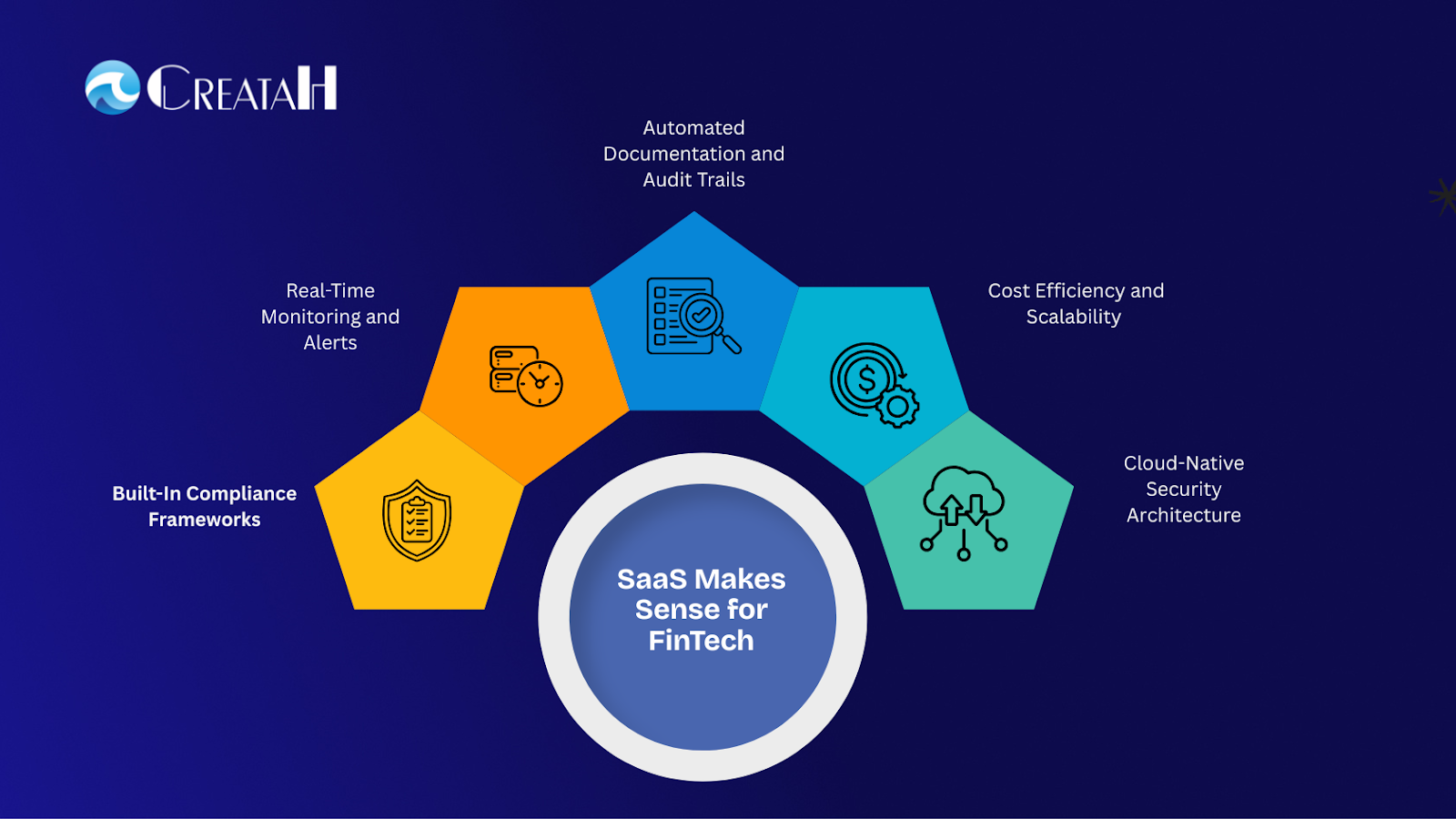
Why SaaS Makes Sense for FinTech
SaaS (Software as a Service) platforms provide on-demand tools in cloud environments, and remove the need for an on-prem tech stack or tracking compliance manually. Here are a few reasons why FinTech companies are loving this model:
- Built-In Compliance Frameworks
SaaS solutions will often come built-in with compliance frameworks surrounding major compliance such as GDPR, SOC 2, PCI DSS etc. If you are required by law to comply with a compliance framework, these platforms are pre-built with controls, audit logs, documentation and more built-in, which means less time and headache meeting regulatory requirements.
2 Real-Time Monitoring and Alerts
SaaS allows FinTechs to see their systems in real-time, and provide instant alerts when suspicious activity occurs, security checks fail and non-compliance policies are breached, most importantly providing visibility as to what actually occurred. SaaS provides proactive monitoring that identifies and signals risks, long before they escalate into reports of incidents.
3 Automated Documentation and Audit Trails
SaaS tools provide documentation automatically, so you do not scramble to find compliance documentation during your audit. SaaS tools create documentation to track your user activity, policy changes, access logs and more, all providing one easy downloadable audit trail to regulators.
4 Cost Efficiency and Scalability
SaaS solutions are subscription-based, meaning no up-front costs for investing in infrastructure or cybersecurity staff. As your FinTech business expands, the platform grows as well, without the overhead of redesigning systems or hiring additional compliance staff.
5 Cloud-Native Security Architecture
Most SaaS solutions take a shared responsibility model and provide enterprise-grade encryption, access control and identity management. Your data is securely stored, back-ups happen automatically and patches are kept up-to-date; all help FinTechs stay secure by design.
6 Rapid Deployment and Updates
Legacy compliance software requires extensive installation and manual updates. SaaS tools can be deployed in the course of hours or days. SaaS tools also roll out updates automatically to keep you current and compliant.
7 Seamless Integration with Existing Tools
SaaS tools all integrate seamlessly with CRMs, payment gateways, analysis dashboards, and user management systems. This keeps compliance from being a stand-alone, siloed function; it becomes part of your whole operational workflow.
Key Features to Look for in a SaaS Compliance Solution
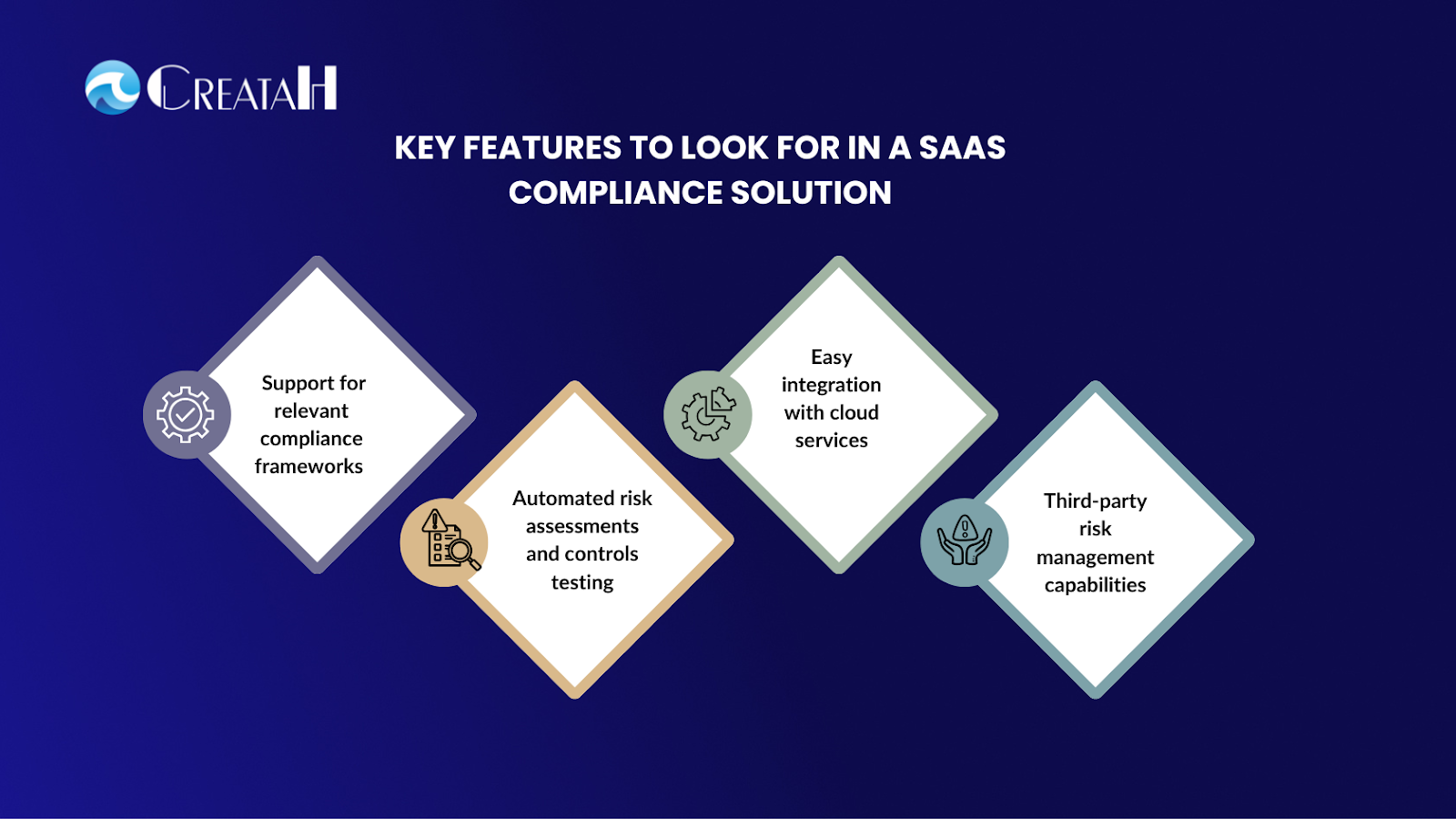
When selecting a SaaS compliance solution for FinTech, ensure the platform offers:
- Support for relevant compliance frameworks (PCI DSS, GDPR, SOC 2, etc.)
- Automated risk assessments and controls testing
- Role-based access control and user behavior analytics
- Data encryption (in transit and at rest)
- Third-party risk management capabilities
- Easy integration with cloud services (AWS, Azure, GCP)
- Vendor compliance reporting and SLA monitoring
Real-World Use Case: FinTech Startup to Scale-Up
Imagine a FinTech startup that suddenly develops a mobile-based micro-loans product that enables users, in multiple countries, to borrow small dollar amounts. Not long after launch, within about six months, the company was processing tens of thousands of transactions per day and was storing personal financial information of customers in different parts of the world.
By utilizing a SaaS-based compliance and security platform, the startup was able to:
- Automate GDPR compliance across EU users
- Set up SOC 2 audit workflows in under 2 weeks
- Get real-time alerts on login anomalies
- Track vendor access and secure third-party integrations
- Cut compliance overhead costs by 40%
Without a SaaS foundation in place, growth for the startup would have inevitably halted due to legal issues and infrastructure constraints.
Build with Confidence Partner with Creatah
At Creatah, we recognize that FinTech companies have to walk a very fine line between innovating and being in compliance. This is why we help you implement SaaS solutions for compliance and security in FinTech that are secure, scalable and completely appropriate for your business model.
From advisory through deployment, we ensure that your digital finance solution is secure and compliant – be it a neobank, a lending platform, or crypto wallet.
Stay compliant. Stay secure. Stay ahead.
Contact us Creatah now to see how we can actually help you with your FinTech compliance needs without getting in the way of your velocity.
