
How AI and Machine Learning Are Transforming Android Apps
Artificial Intelligence (AI) and Machine Learning (ML) are no longer futuristic concepts — they’re now at the core of modern Android app development. From personalized user experiences to predictive automation, AI in Android app development is redefining how users interact with mobile applications. Today’s apps are not just tools; they’re intelligent assistants that learn, adapt, and improve over time.
This transformation has created endless opportunities for businesses to deliver smarter, more engaging, and more efficient mobile experiences.
The Rise of AI in Android App Development
The Android ecosystem, powered by Google’s AI-first approach, has been one of the biggest beneficiaries of AI innovation. Developers now integrate features like natural language processing, voice recognition, predictive text, and visual search into everyday apps with ease.
Frameworks like TensorFlow Lite, ML Kit, and PyTorch Mobile have made it possible to run advanced machine learning models directly on Android devices enabling real-time intelligence even without an internet connection.
This on-device intelligence has fueled new possibilities, from camera-based AR applications to personalized shopping assistants and fitness trackers that learn user behavior.
1. Personalization Through AI
One of the most visible transformations in Android apps is personalization. AI systems analyze user preferences, usage patterns, and real-time data to deliver highly tailored experiences.
For example:
- Streaming apps like Netflix or Spotify recommend movies and music based on your past activity.
- E-commerce platforms like Amazon or Flipkart predict what you’re likely to buy next.
- Health and fitness apps use AI to suggest personalized workouts or diet plans based on progress and goals.
In short, personalization powered by AI makes users feel understood — driving engagement, retention, and satisfaction.
2. Enhanced User Engagement with Chatbots and Voice Assistants
The rise of conversational AI has led to the integration of chatbots and voice assistants in many Android applications.
AI-powered assistants like Google Assistant or in-app bots can:
- Handle customer queries instantly.
- Assist with product recommendations.
- Simplify navigation and booking processes.
For instance, a travel app can use natural language processing (NLP) to understand user queries like “Find me a flight from Chennai to Delhi tomorrow morning” and display results within seconds.
Voice interaction not only improves accessibility but also adds a human-like experience that keeps users engaged and reduces drop-offs.
3. Smarter Predictions and Recommendations
Machine learning models excel at pattern recognition, allowing Android apps to predict what users need before they even ask.
Some examples include:
- Finance apps predicting spending habits or bill payments.
- Food delivery apps predicting your usual orders at specific times.
- Navigation apps like Google Maps estimating travel times based on live traffic data.
This predictive intelligence helps users save time and increases the perceived value of the app.
4. Image and Voice Recognition Capabilities
AI has made Android devices far more intuitive through image and voice recognition technologies.
- Camera-based AI: Android phones now use ML models to automatically enhance photos, detect objects, or enable augmented reality (AR) features. Apps like Snapchat and Instagram rely heavily on this to create interactive filters.
- Voice recognition: Voice-to-text, language translation, and real-time captioning are powered by deep learning models optimized for Android.
This combination of vision and sound intelligence enhances accessibility and makes apps more immersive.
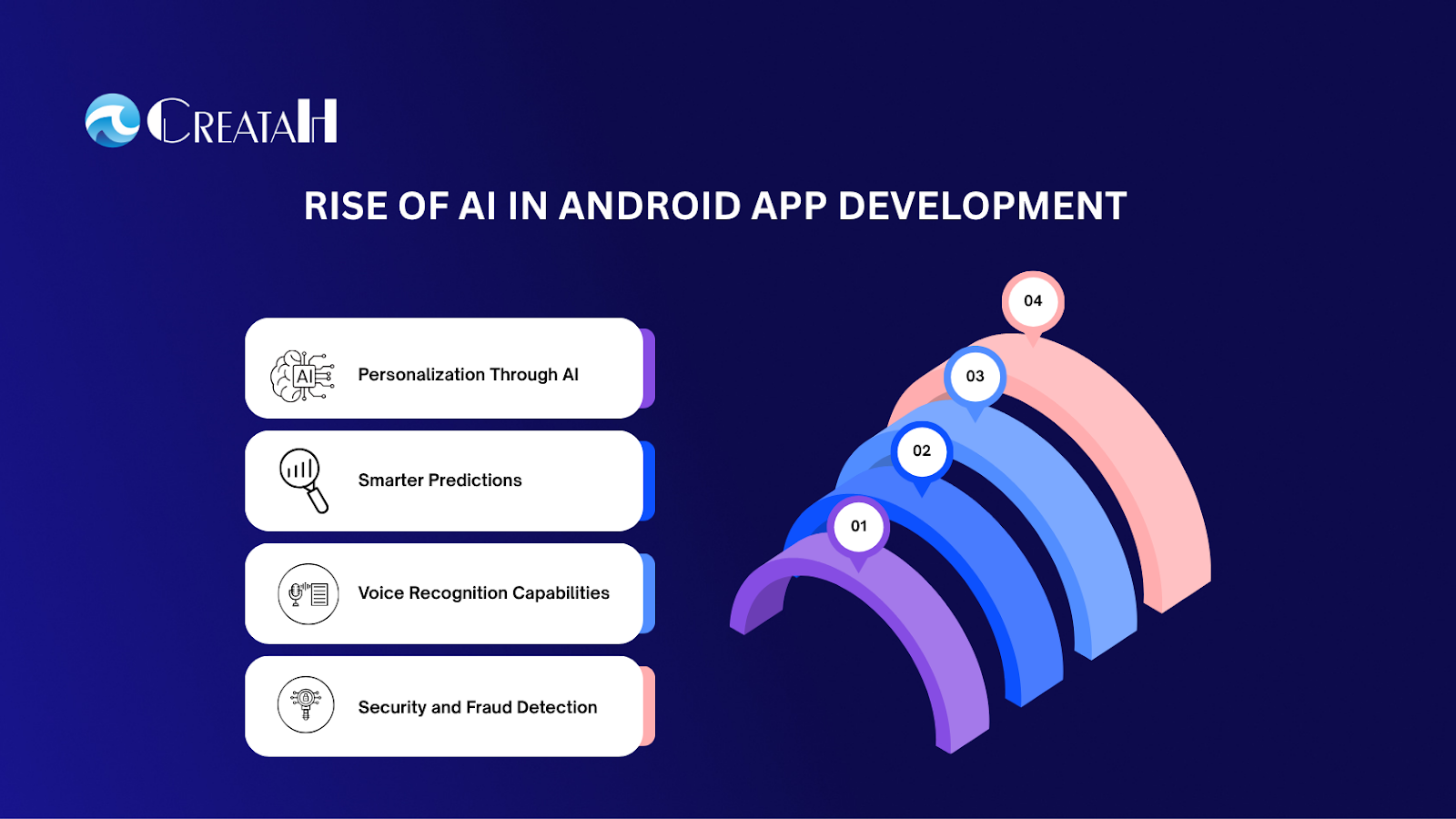
5. Security and Fraud Detection
AI has also improved Android app security. Machine learning algorithms continuously monitor patterns of user behavior and detect anomalies that may signal fraudulent activity or unauthorized access.
For instance:
- Banking apps now use AI to flag suspicious transactions.
- Authentication systems leverage biometric verification (like facial recognition or fingerprint scanning) to enhance data security.
- App stores use AI-based screening to prevent malicious apps from being published.
This makes both developers and users more confident in Android’s growing ecosystem.
6. Predictive Maintenance and Performance Optimization
AI doesn’t just improve the user side of apps it also helps developers behind the scenes. Predictive analytics tools can monitor app crashes, performance bottlenecks, and battery consumption in real time.
By learning from historical performance data, AI can:
- Suggest code optimizations.
- Predict potential bugs before deployment.
- Reduce downtime and improve app stability.
This proactive maintenance ensures smoother experiences for users and reduces the cost of long-term app management.
7. AI in Future Android Trends
The future of AI in Android app development will be driven by emerging technologies like:
- Edge AI: Running complex ML models on-device for faster processing.
- Federated learning: Allowing AI models to learn from distributed data without compromising privacy.
- Generative AI: Creating personalized content such as AI-driven avatars, fitness plans, or automated stories.
- Contextual AI: Understanding not just user input but also emotional tone, environment, and intent to offer the next level of personalization.
Android developers who adapt to these advancements will be able to deliver experiences that feel less like apps and more like companions.
The impact of AI in Android app development is both revolutionary and long-term. From creating intuitive interfaces to automating backend processes, AI ensures that every interaction feels smarter and more personal.
As users continue to expect seamless, predictive, and adaptive app experiences, AI and machine learning will remain at the heart of innovation.
At Creatah, we specialize in building intelligent, data-driven Android applications that merge design, performance, and AI-powered insights helping businesses stay ahead in a competitive digital landscape. If you’re ready to explore how AI can enhance your mobile product, connect with us today to discuss your next Android app development project.
