

Fitness Apps and Sleep Tracking: Why Rest Is Just as Important as Your Workout
In the wellness world, we’ve all heard the phrase “no pain, no gain.” But in the quest of physical health, we sometimes forget how equally important rest and recovery can be to our overall health. While training is important for building strength, endurance, and fitness capacity, sleep is also necessary for achieving total health. Sleep can be viewed as the “secret weapon” that enables your fitness journey and progression to be sustainable. Recently, fitness apps have gained tremendous popularity, and now these apps are evolving to include tracking sleep in the mobile app process. In addition to tracking workouts, fitness apps can now track sleep, which will help the user understand how beneficial sleep is to fitness recovery and assist in making future training or recovery decisions.
The Association Between Sleep and Fitness
Adequate sleep is important for many aspects of fitness, including muscle recovery, energy restoration, and mental clarity. If the body does not receive enough sleep, the body will struggle to properly perform during training (muscle activity) and recover afterward. Sleep affects a variety of physiological processes that are important for fitness, including:
- Muscle Recovery: The body releases growth hormone during deep sleep (the sleep cycle that is vital to muscle recovery). If you don’t get enough sleep, the recovery process is ultimately attenuated, leaving the muscles sore (recovery not completed) and ready for training again at the next scheduled activity.
- Energy Restoration: During sleep, the body promotes glycogen stores (the primary energy source available for the muscles during activity). If you don’t get enough sleep, your body may have low energy levels, causing workouts to be harder and more exhausting.Moral Clarity and Motivation: Insufficient sleep can lead to cognitive fatigue, poor decision-making, and lower motivation all of which can hinder your performance and consistency when working out. Sleep directly contributes to your ability to focus, stay driven, and be mentally resilient.
How Fitness Apps Provide Sleep Tracking
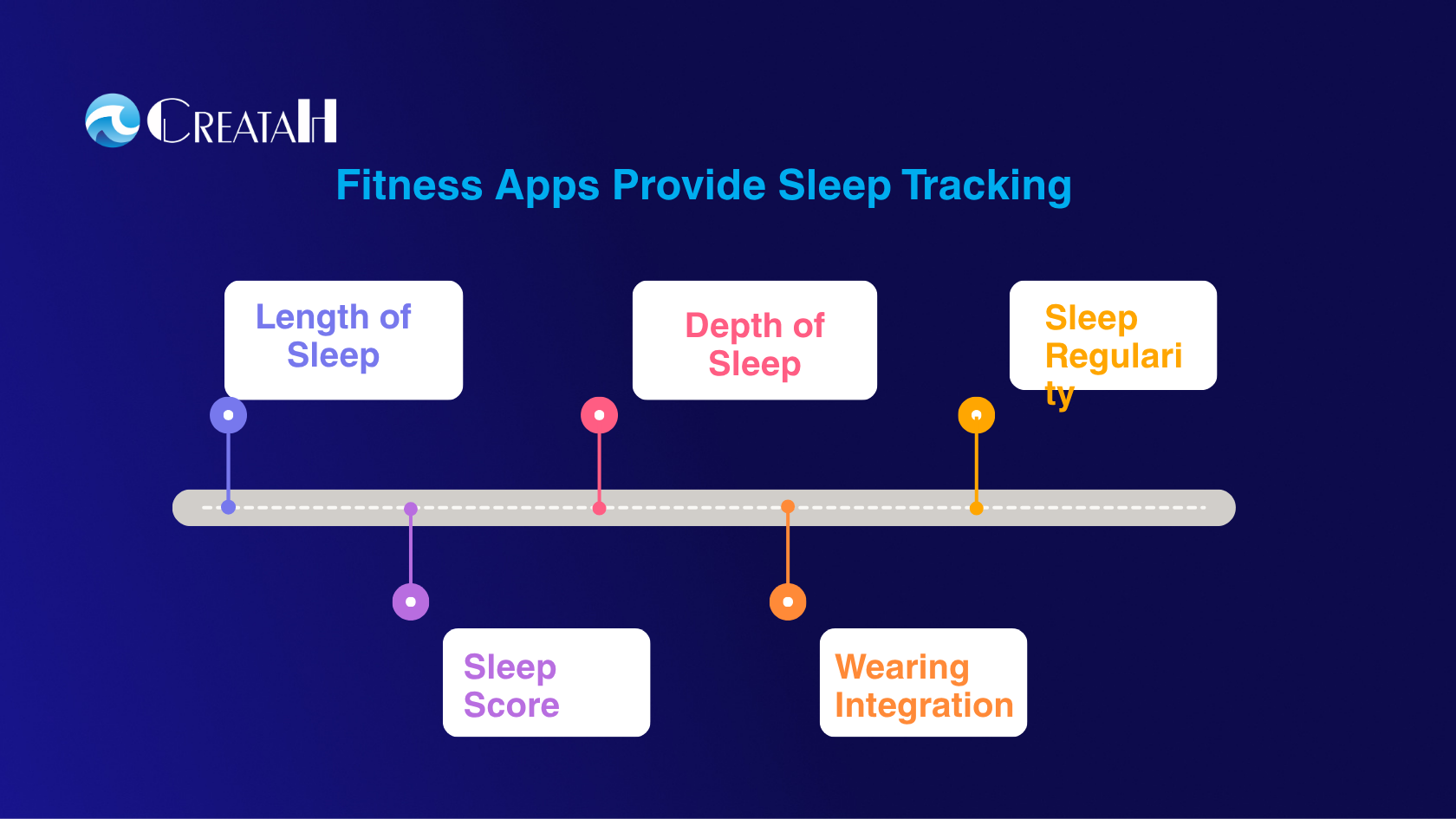
Fitness applications have transformed to also provide sleep tracking, so users can not only track movement but also the quality and quantity of sleep. The development of fitness apps in this regard deploys a collection of sensors, algorithms, and integrations which provide an understanding of sleep history and sleeping trends. Examples of the sleep data that is tracked include:
- Length of Sleep: Fitness apps measure the amount of time you sleep each night based on the Generally recommend sleep recommendations of 7-9 hours of sleep for the typical adult. The length of sleep is an important construct for the user to measure if you are getting the proper amount of sleep for your fitness goals.
- Depth of Sleep: Many fitness trackers will also track and separate sleep into depths such as: light sleep, deep sleep, and REM (rapid eye movement) sleep. Deep sleep specifically is essential for muscle recovery, while REM sleep is particularly important to cognitive function and memory. Applications that quantify and measure aspects and depths of sleep give users information on their quality of sleep.
- Sleep Regularity: At a minimum, fitness applications will measure sleep over time to monitor patterns to see whether or not the user is going to bed and waking up at the same time each day. Sleep regularity or regularity is part of a healthy sleep hygiene practice and is related to performance during physical activity.t.
- Sleep Score: Numerous applications provide a “sleep score” which is based on the quality and duration ofThis evaluation enables users to figure out aspects they could be better at, such as getting to sleep earlier or less screen time before bed.
- Wearing Integration: Many applications sync with wearable accessories, like smartwatches, wearable fitness trackers, heart rate monitors, etc., that could help. These addition items will track more data points, like heart rate variability and body temperature, to better assess sleep.
Why Sleep Tracking is Important for Fitness
Sleep tracking is a game changer for fitness enthusiasts, athletes, and generally anyone who wants to improve their health. Here are a few other reasons sleep tracking is so valuable when tracking fitness:
- Improved Training Plans: Many fitness, as-apps include the option of sleep tracking. This gives users the ability to scheduled their workouts based on their recovery. For instance, if a user does not sleep well, an app may suggest a light workout or recovery day to avoid over-training.
- Reduced Risk of Overtrained: Lack of sleep can lead a person to have overtraining syndrome, leading to minimum performance, fatigue, and potential injuries. Sleep tracking tells the user about the body’s recovery capabilities between workouts.
- Better Decisions: When a user can understand how sleep will impact their workout, they will have a better decision-making process regarding exercise, diets, etc. For example, when a training session is scheduled following a night of poor sleep, users may decide to modify the intensity of their workout or perform more restorative movements such as stretch or yoga.
- Long-Term Health and Well-Being. Tracking athletics-related data and sleep data will help users achieve an understanding of how a balanced approach to health generates fitness results that are maintainable. The adequate amount of sleep helps not only with exercises performed during workouts, but overall health, such as mental and emotional health.
Practical techniques for better sleep through fitness health apps. Fitness health apps have the advantage of providing awareness into user’s sleeping habits, have some habits in place to improve their quality of sleep is useful.
- Track sleeping time-Use the fitness app to track bedtime and wake time. Try to sleep at the same time and wake up at the same time each day. Going to bed and waking up at the same time on different days helps to regulate your circadian rhythm.
- Environmental consideration- Make sure that a sleep environment is conducive to sleep. Fitness apps likely cannot track sleep, seemingly, factors such as temperature in the room and noise. Ideally, to sleep well, the room should be cool, dark and quiet. Make adaptions to room temperature and environmental conditions according to feedback provided by your app in regards to waking, sleeping, not sleeping, and during sleep disturbances.
- Monitor caffeine and screen time– Use your fitness app to remind you to avoid getting caffeine after a particular time in the afternoon and early evening time. In addition to caffeine, should limit interfacing with screens at least 30 minutes prior to bed. For some people, the blue light emitted from a phone or a laptop will influence poor quality sleep.
- Introduce calming – If your app indicates that you had poor sleep, or in other words restless nights, introduce more calming techniques into your routine before bed. For example, try meditating or doing breathing exercises to decrease anxiety. Alternatively, listen to calming music for some time prior to sleep.
As fitness enthusiasts, many of us focus on training hard and pushing ourselves. But it’s equally important to recognize that rest is just as critical as the workouts themselves. Without proper recovery, even the best training plan can fall short.
That’s where fitness apps with integrated sleep tracking make a real difference. By monitoring rest patterns, these apps help users understand how recovery impacts performance—whether sleep is boosting progress or holding it back.
The marriage of fitness and sleep tracking features creates a more holistic approach to health and wellness. Instead of treating workouts and recovery as separate, these apps unify them, giving users a clearer picture of their overall well-being.
Behind this seamless experience lies mobile app development, which enables the integration of personalized sleep insights, workout adjustments based on rest quality, and even reminders to optimize recovery. By leveraging thoughtful development, fitness apps can move beyond exercise tracking and deliver a complete health ecosystem that balances effort with recovery.
At Creatah, wholistic health is important, we are mobile app developers that integrate to provide an enhanced user experience and health outcomes features. Whether it is a custom fitness app with sleep and with sleep quality, or other projects based on health, our team is devoted to creating premier fitness apps on mobile devices. Please contact Creatah to develop an innovation on mobile devices, and custom develop further the features on your existing mobile application.
