

AI-Powered Demand Forecasting for Logistics and Warehousing
In logistics and warehousing, speed is everything when it comes to demand forecasting, and it is difficult to predict these kinds of dynamics. When shipments seek attention and supply chains are stressed, any disruptions will suffice as complaints from customers. Delayed shipments, overstocked inventory, or empty shelves can create problems, or worse, compound into a massive loss. The hype around demand forecasting models that rely on manual calculations and historical sales histories are simply not enough in unbelievably unpredictable markets.
What is AI-Powered Demand Forecasting?
AI-powered demand forecasting for logistics ensures operations are predicted, prepared, and performed well again for us! AI-powered demand forecasting works through machine learning algorithms, big data analytics, and real-time processing to create predictions about future demand for products to an extent that traditional demand forecasting methods simply cannot or may be prohibitively more costlier. AI-empowered forecasting is able to analyze millions of datasets at once from multiple, external sources – and then take into account the variables of each data point, such as to account for deviations from sales trends, that simplify the forecast.
Why Logistics and Warehousing Need AI Forecasting
In logistics and warehousing, forecasting is more than knowing what to stock, it is knowing where, how much, and when to move those goods. Sifting through poor or unstructured forecasting can lead to:
- Overstocking → Cash tied up in good to sell capacity and supportive storage costs.
- Understocking →Lost sales and dissatisfied customers.
- Inefficient resource allocation → Idle trucks or under-utilizing warehouse space or clients with auditor needs for rushed shipment.
AI can do this by producing dynamic, data-driven demand predictions to supercharge operations.
Key Benefits of AI-Powered Demand Forecasting
1. Higher Accuracy
AI models can factor in hundreds of variables that traditional methods overlook. For example:
- Local events and holidays
- Weather changes affecting supply chains
- Competitor promotions or market disruptions
2. Real-Time Adjustments
Unlike static forecasts, AI systems can adapt instantly to new data—whether it’s a sudden demand spike for a trending product or a supply delay from a key vendor.
3. Optimized Inventory Levels
By balancing supply and demand more precisely, businesses can:
- Reduce holding costs
- Minimize waste from perishable goods
- Improve cash flow
4. Better Logistics Planning
AI-powered forecasting helps in:
- Route optimization
- Warehouse space planning
- Scheduling labor for peak demand periods
How AI Works in Demand Forecasting for Logistics
Step 1: Data Collection
AI systems gather data from:
- Sales history
- ERP and warehouse management systems
- IoT devices tracking goods in transit
- External sources like market reports, social media, and weather APIs
Step 2: Data Cleaning and Processing
The systems will first clean the data by removing errors, filling gaps, and tracking if potently useless or uncontrollable un-standardized data to give the AI an accurate picture of the variability in the data.
Step 3: Model Training
The machine learning algorithms train off the previous models of data by recognizing patterns and testing the predicted forecasting against actual outcomes. This continual evaluation of forecast accuracy leads to more dependable forecast results.
Step 4: Forecast Generation
Once the model is trained, it creates demand forecasts each month which may be regional, by product, and/or by time-frame.
Step 5: Continuous Optimization
Through monthly data feeding from a variety of data sources, the models continually improve through the constant stream of new data. In summary, the beauty of the model is the AI will become much smarter, more accurate, and become a more trusted federated forecasting process over time.
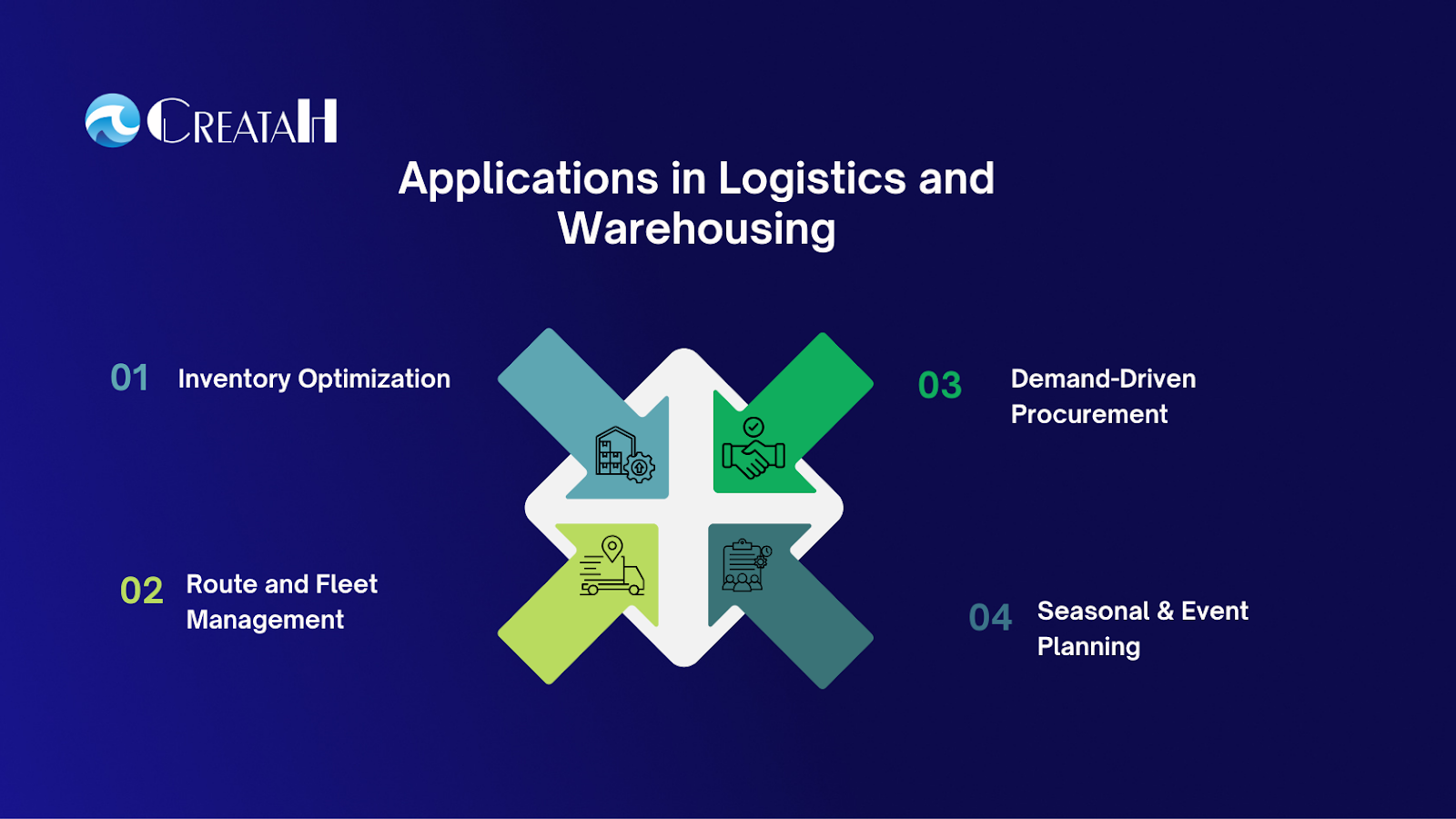
Applications in Logistics and Warehousing
1. Inventory Optimization
AI will understand the exact right amount of product needed to fulfil customer demand without over stock.
2. Demand-Driven Procurement
Suppliers will be able to receive factual forecasts which means they will have the correct amount of raw materials or products on supply before the product is needed.
3. Route and Fleet Management
Demand forecasts will help to plan the best delivery routes which fill delivery container capacity to ensure the right volume is transported in the most fuel efficient manner and on time.
4. Seasonal & Event Planning
AI can provide accurate lead indicators of demand spikes for seasonal periods, sporting events or product launches.
5. Warehouse Layout Optimization
Forecasting insights can assist on how to allocate warehouse space and assist on stocking high demand products in areas of the warehouse that is easily accessible
Challenges in AI-Powered Forecasting (and How to Overcome Them)
- Data Quality Issues → Educate on the value of data cleaning and use appropriate data integration tools.
- Resistance to Change →Train users and make them feel comfortable using AI related software tools.
- Integration with Existing Systems → Use appropriate APIs and/or Middleware to ensure compatibility.
- Initial Investment → Understand the return on investment and start small before rolling out large scale applications.
Best Practices for Implementing AI Forecasting in Logistics
- Start with a Pilot Project – Begin testing AI forecasting with a single product category or geographic area before scaling.
- Use a Cloud-Based Platform – Leverage the scalable capacity of today’s cloud-based platforms and the ability to access real-time data.
- Integrate with Mobile Solutions – Provide logistics managers with mobile access to forecasts for decision-making anytime, anywhere.
- Collaborate Across Teams –Make sure that marketing, sales, operations, and procurement can assess a forecast with the same insights.
- Review and Refine Regularly –Also make sure to achieve continuous improvement on the model with new data.
The Future: AI + IoT + Mobile Apps in Logistics
The future of AI-driven demand forecasting will involve combining AI with IoT sensors and mobile app solutions:
IoT devices deliver real-time shipment and inventory status, while mobile apps make forecasts, alerts, and inventory availability accessible anywhere. AI will take the guesswork out of making demand forecasting insights available for meaningful decision-making by any relevant employee in warehousing, transportation, or logistics management.
Driving Smarter Logistics with Creatah
AI-driven demand forecasting for logistics has become a necessity for companies to have a competitive market position where speed, accuracy, and customer expectations are at the forefront. Doing so for logistics and warehousing companies means reducing waste, streamlining operations, and enhancing customer experience.
At Creatah, we combine AI technology with custom mobile app development to give logistics teams the tools they need for smarter, faster, and more profitable operations. From AI-powered dashboards to real-time inventory tracking apps, we help transform forecasts into actionable results. If you’re ready to upgrade your logistics operations, Creatah can design the right mobile-first solution to keep you ahead of the curve.
