
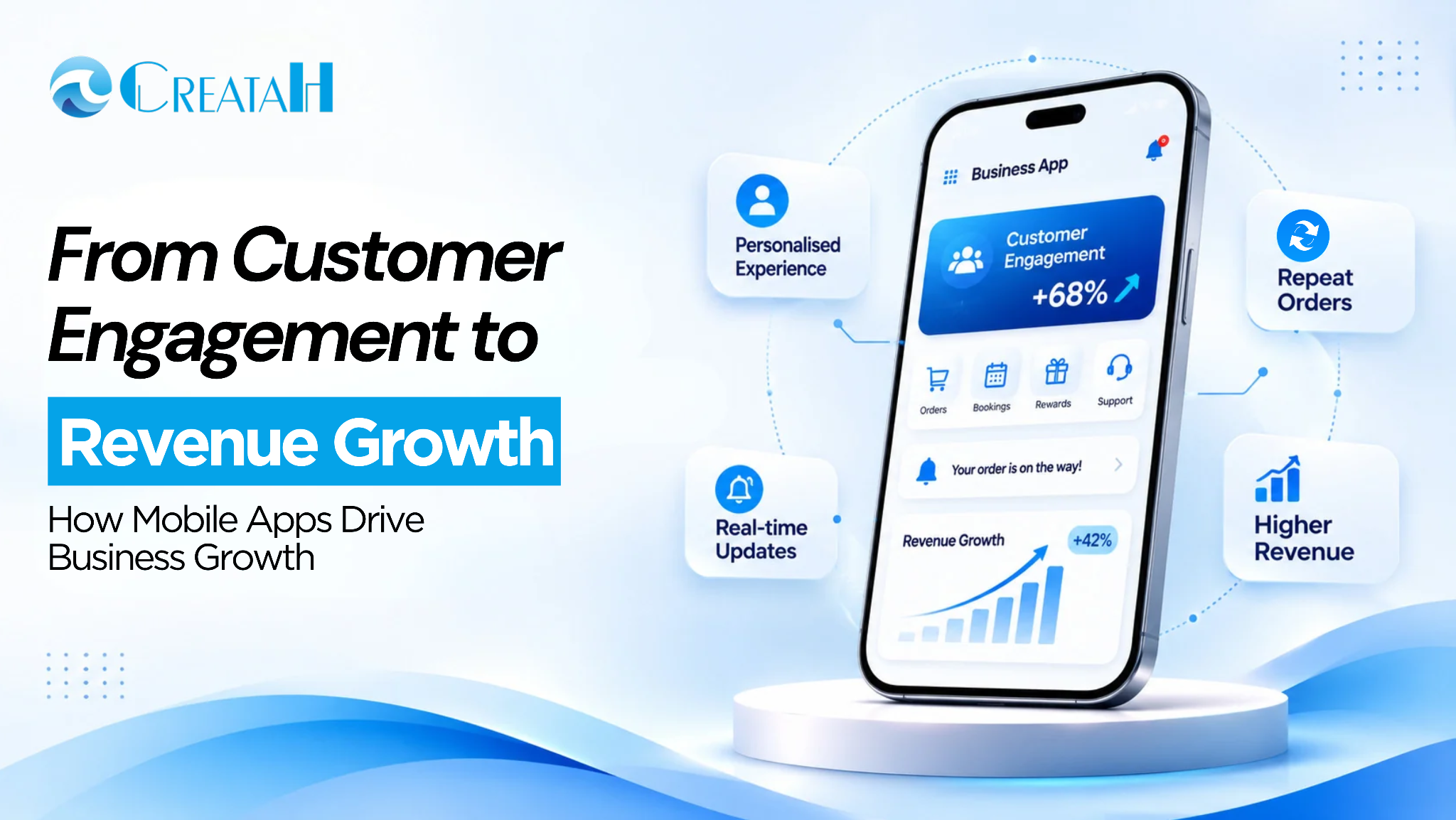
How did you book your last cab? Pay your electricity bill? Order dinner on a rainy evening? Most likely on your phone, in an app, without a second thought. Your customers bring that same expectation to your business, and it’s one reason so many companies are now looking seriously at mobile app development in company Chennai. Not as a shiny tech project, but as a practical way to stay close to customers and grow.
Here’s the simple version of why it works. An app puts your business on the screen; people check dozens of times a day. Customers can browse, book, pay or ask for help without calling or visiting. And you get a direct line to them that doesn’t rise and fall with Google rankings or the latest social media algorithm change.
Below, we’ll walk through what an app really does for a business, from engagement and sales to the glamorous but valuable work of saving your team time, and how to tell whether a custom app is worth the investment.
Why Mobile Apps Are Important for Modern Businesses
For a lot of people, the phone has quietly become the main way they shop, pay bills, learn and deal with businesses. The laptop comes out for work. Almost everything else happens on a six-inch screen.
That habit has changed what customers expect. They want to check a price at 11 pm, move an appointment while stuck in traffic, or see where their order is without ringing anyone. When a business asks them to call during office hours or fill in a long form, it starts to feel old-fashioned, even if the service itself is excellent.
An app answers that need better than a website usually can. It’s one tap away, it remembers who the customer is, and it tends to run smoothly even when the network doesn’t. Small conveniences like these add up. People return to what feels easy, and over time that becomes loyalty.
Then there’s the competition down the road. If another clinic lets patients book in ten seconds and yours still needs a phone call, some patients will drift across. An app won’t win customers on its own, but it removes one easy reason to lose them.
How Mobile Apps Improve Customer Engagement
People don’t keep using an app just because it exists. They keep using it because it keeps being useful. Business mobile applications are well suited to that, because they can treat each customer a little differently.
Personalized experiences
An app knows what a customer bought, booked or looked at, and can use that to decide what they see next. A clothing store can show new arrivals in someone’s usual size. A diagnostic centre can remind a patient that their annual health check is due, with last year’s package already selected.
Push notifications and real-time updates
“Your order has shipped.” “Your appointment is tomorrow at 10.” “Your report is ready.” Little messages like these save customers a phone call and quietly build trust. The catch is restraint. Send too many, and people switch notifications off or delete the app altogether.
Loyalty programmed and rewards
Paper stamp cards get lost in wallets. An in-app rewards section doesn’t. A café that moves its loyalty card into an app gives regulars a reason to keep coming back and a reason to keep the app on their phone.
Easier access and better support
When products, bookings, past orders and a support chat all live in one place, customers stop hunting for information. Many of their questions get answered through in-app chat or FAQs before anyone on your team needs to pick up the phone.
How Mobile Applications Help Businesses Increase Revenue
Engagement is nice, but sooner or later every business owner asks the obvious question: will the app actually make money? Usually, yes, through a few different routes.
The simplest is selling directly. If customers can browse, save their payment details and check out in a few taps, there are fewer moments where they give up halfway, which happens a lot on clunky mobile websites.
Some businesses go a step further with in-app purchases or subscriptions. A yoga studio might sell ten-class packs in the app. A coaching institute might offer monthly access to recorded lessons. Income like this is steadier and easier to plan around than one-off sales.
Where apps really earn their keep, though, is repeat business. Saved favorites, one-tap reorders and a well-timed reminder make buying again almost effortless. Keeping an existing customer generally costs less than finding a new one, so for many businesses this is where the app pays for itself.
Personalized offers help too. Because the app knows what someone likes, promotions can feel relevant instead of random: a small discount on the item they’ve looked at three times this week, or a birthday offer that actually shows up on their birthday. And with fewer steps between “I’m interested” and “done”, more of those visits turn into orders, bookings and enquiries.
Improving Business Efficiency Through Mobile Applications
Not every benefit of an app is customer-facing. Many of the gains show up behind the scenes, in the work your team no longer has to do by hand.
Take bookings. A salon or clinic that takes appointments by phone spends hours each week answering calls, juggling a diary and chasing no-shows. An app with self-service booking, automatic confirmations and reminders handles most of that on its own, and staff can see the day’s schedule at a glance.
Apps also tidy up communication and customer information. Order details, service history and preferences sit in one system instead of being scattered across notebooks, spreadsheets and WhatsApp chats. When a customer calls, whoever answers can see the full picture.
Internal apps can be just as valuable. A field service company can give technicians an app to receive jobs, update status and capture signatures on site, which means fewer calls back to the office and faster invoicing.
The common thread is less manual work. Every repetitive task an app takes over frees your team to focus on customers and decisions that genuinely need a person.
Choosing the Right Mobile App Development Company in Chennai
Chennai has no shortage of app developers, which makes choosing harder, not easier. Rather than comparing quotes alone, look at how each team thinks and works. These questions help.
Do they understand your business, not just the brief? The best mobile app development company in Chennai for you will ask about your customers, your processes and what success looks like before talking about features.
Can they build for both Android and iOS? Most businesses need both. Check whether the team builds natively, uses a cross-platform framework like Flutter or React Native, and why they’d recommend one over the other for your project. An Android app development company in Chennai that also handles iOS saves you managing two separate vendors.
How strong is their UI/UX work? An app that’s confusing to use won’t be used. Ask to see live apps they’ve designed and try them yourself.
How do they handle security and performance? This matters most for apps that process payments, health information or personal data. Ask how they protect data and test for speed.
What happens after launch? Apps need updates for new OS versions, bug fixes and new features. Clarify maintenance and support terms upfront.
Can the app grow with you? A good partner plans the architecture so that adding users, features or integrations later doesn’t mean starting over.
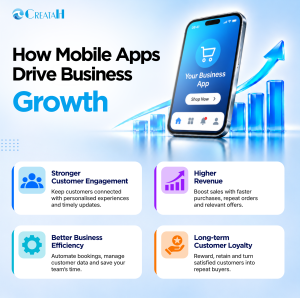
The Future of Mobile Applications for Business Growth
Apps keep changing, but a few directions are already clear enough for businesses to plan around.
AI-powered features are moving from novelty to everyday use: smarter search, product recommendations, chat assistants that handle common questions, and tools that summaries information for users. The value lies in solving a real customer problem, not adding AI for its own sake.
Deeper personalisation follows naturally. As apps learn more about user preferences, with proper consent, they can tailor content, offers and reminders more closely to each person.
Cloud-based apps make it easier to sync data across devices, roll out updates quickly and scale without managing your own servers.
Mobile payments continue to grow in India, so smooth UPI, wallet and card integration is increasingly expected rather than a bonus.
IoT-enabled apps connect phones with physical devices, from smart home controls to equipment monitoring in factories and hospitals.
Stronger security underpins all of this. With more payments and personal data flowing through apps, encryption, secure logins and compliance with data protection rules are becoming basic requirements for any serious business app.
Turn Customer Engagement into Business Growth
A mobile app works best when it solves real problems for your customers and your team. It keeps you a tap away, makes buying and booking easier, brings customers back, and quietly removes hours of manual work from your week. Together, those gains turn day-to-day engagement into steady growth.
The key is building an app around your own goals rather than a generic template. If you’re exploring a mobile app development company in Chennai, start by listing what you want customers to do more easily and which tasks your team would happily hand over. That list will shape the right app far better than any feature checklist.
At Creatah, we work with businesses as a technology partner for mobile application development services, building Android, iOS and Flutter apps shaped around each client’s customers, processes and growth plans.
Have an app idea, or a process you’d like to simplify? Contact Creatah today and let’s talk about building an app that works for your business.
Frequently Asked Questions
How can mobile apps help businesses increase revenue?
Mobile apps increase revenue by making it easier for customers to buy, book and come back. Fast checkout, saved payment details, one-tap reorders, personalized offers, loyalty rewards and subscription options all reduce friction and encourage repeat business.
Why is mobile app development important for customer engagement?
An app gives customers a personalized, always-available way to interact with your business. Features like push notifications, order tracking, loyalty programmed and in-app support keep customers informed and make each interaction quicker and more useful.
How much does it cost to develop a business mobile application?
There’s no fixed price. The cost depends on the features you need, the app’s complexity, whether you build for Android, iOS or both, integrations with other systems, design requirements and ongoing maintenance. The best approach is to define your requirements first and ask developers for a detailed estimate.
How do I choose the right mobile app development company in Chennai?
Look for a team that understands your business goals, has experience building both Android and iOS apps, shows strong UI/UX work, takes security seriously and offers clear post-launch support. Reviewing live apps they’ve built and asking how they would approach your project are good starting points.
What is the difference between custom and ready-made mobile applications?
Ready-made apps are pre-built templates that are quicker and cheaper to launch but offer limited flexibility. Custom apps are designed specifically for your business, with your own features, branding and integrations, and can scale as your needs grow.
