
Top Reasons Startups Prefer React Native for Mobile App Development
Building a mobile app is one of the first major decisions made by any startup. Time, budget, and technology choices are beginning factors in establishing early success. Among the many frameworks available, React Native mobile app development has rapidly risen to the top choice android iOS apps for startups across the world. Launched by Facebook, React Native enables businesses to develop cross-platform apps that appear as native apps at a lower cost and just as effective as those developed in native language although the creation time may be longer.
In this blog post, we will elaborate on the reasons React Native is becoming so popular amongst startups and how it allows them to deliver high quality apps quickly and at a lower cost.
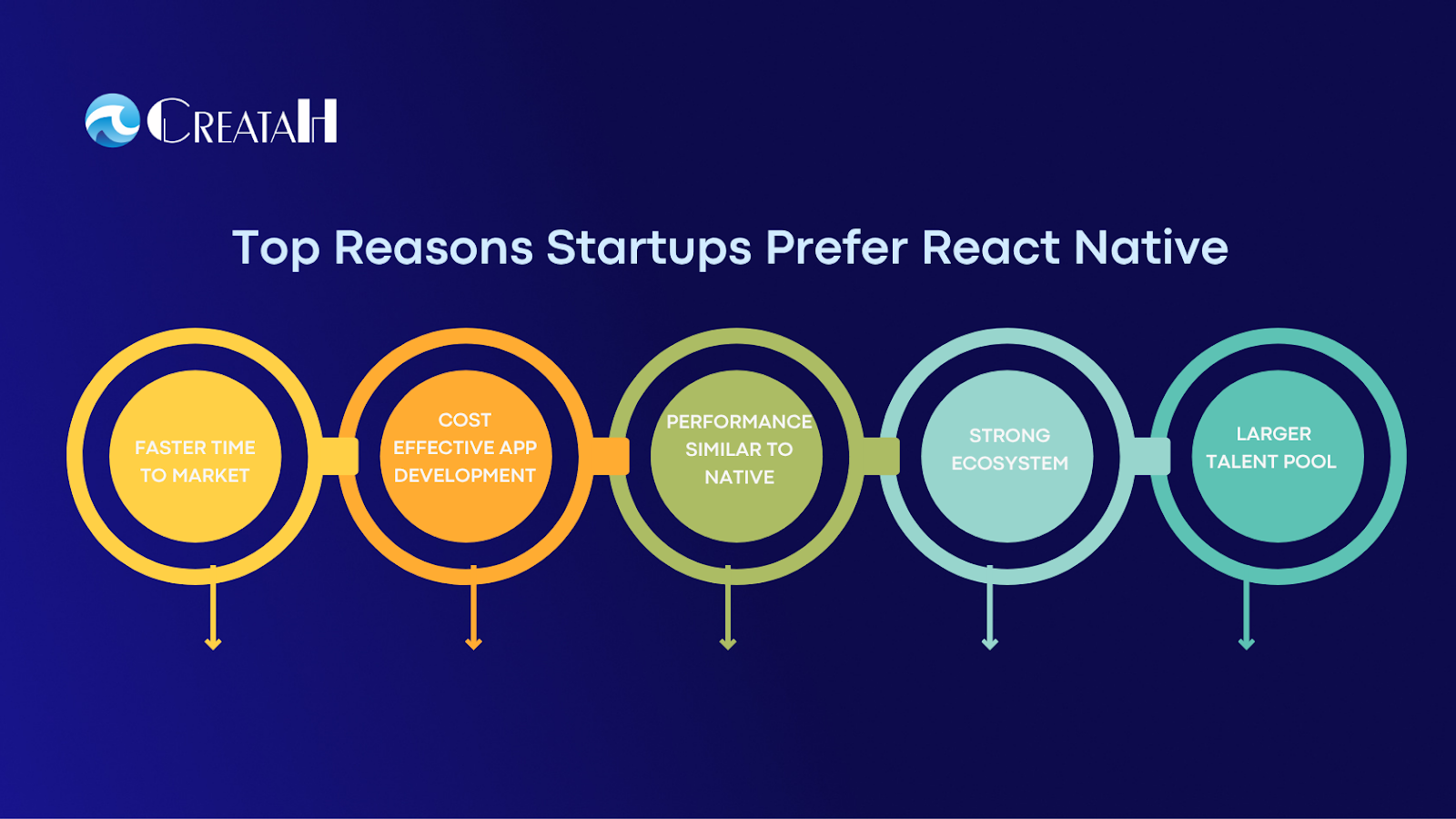
1.Faster Time to Market
Startups operate in the intense pressure of quick delivery. React Native allows the developer to build code quickly by allowing them to write it once, and deploy on the iOS and Android mobile Operating Systems (OS’s).
The ability to use reusable components helps expedite the development process.
- First, startup teams do not need to develop native teams for iOS and Android.
- Second, developers can leverage the Hot Reload feature, be able to see their changes immediately, thus saving hours of debugging and testing development time.
This all means a startup can market its MVP (Minimum Viable Products) quicker and receive user journey feedback sooner to continue build iterations while staying in budget.
2.Cost Effective app development
Budget is sometimes a barrier for new businesses. You do not need extensive native developers once you hire a factory trained developer team to React Native. With native building if you wanted an app for both platforms, you would either bring in on domestic teams or hire separate teams to accomplish the same goal using two entirely.
Here are a few reasons why React Native is often less expensive than traditional mobile app development.
- Shared code – Code logic can be shared between platforms.
- Better collaboration – Developers are able to work more easily together.
- Mobile application management is simpler – Easier mobile application maintenance/management through a single code base.
To wit, we have found that startups can save 20% to 40% on development costs compared to mobile app developers having a native solution, and without sacrificing any real time to market or a degraded app performance.
3.Performance Similar to Native
The biggest misconception is the performance of cross-platform frameworks, and that they will be “less performant” than a native framework. In practice, however, React Native does a good job of overcoming any performance deficit that a developer has had before using the framework. React Native compiles to native UI components leading to great speed and smooth rendering.
React Native has a few built-in components to extend performance too, that also use native
APIs, for example, a developer could use native animations for a smooth experience.
- Complex animations and transitions – React Native has been proven to handle complex animation transitions to enhance user experience.
- UI Focused / Responsive Applications – Applications can be built quickly and without issue because the framework is responsive and easy to learn.
- In summary, React Native provides startups with a powerful way to deliver great mobile experiences without the burden of cost.
4.Strong Ecosystem and Community Support
React Native has a large open-source community that continually adds to React Native to enhance the framework. Developers have the support and are able to benefit from the following components:
- Various preset libraries – There are literally thousands of preset libraries for developers to utilize in order to enable best of breed mobile experiences.
- Plug-Ins and Third-Party Integration – Industry best practices for plug-ins and tool integration exist because the community keeps updating React natives plugins and tools available.
- Active developer forums – Developers can find assistance quickly and easily, and use forum contributors as trouble shoot bots.
- Frequent Editable React Native library – Each React Native release can have updated feature releases.
For a startup, the community can facilitate troubleshooting, updated costs, all without the developer needing to re-invent the wheel, and can make the tools better over time from the start.
5.Larger Talent Pool
React Native is developed with JavaScript, which happens to be one of the most widely accepted and used programming languages among developers. This lowers the barriers to hiring JavaScript developers, as many developers already are experienced working with React JS or Startups can:
Hire low-cost talent more quickly
Create teams capable of building both web and mobile products
Train current team members to transition into React Native Development
As a result? Faster onboarding, easier scalability, and more predictable development cycles.
6 .Scalable Architecture and Flexibility
React Native enables startups to start small and grow easily. Its modular architecture allows for code to be split up into independent blocks, which makes:
- Easier updates
- Smoother feature builds
- More efficient testing and debugging
As the application grows, so does the structure. APIs and native modules can be added on-demand, which keeps the app future-proof.
7. Cross Platform Plugins and Third-Party Integrations
Because of its interoperability with third-party plugins, your react-native, mobile application can have features like:
- Payment integrations
- Social media authentication
- Maps and geolocation
- Analytics and reporting
Instead of building everything from the ground up, startups can be integrated as needed from the ecosystem pushing the timeline down while improving overall functionality.
8. Future-Proof Yourself with a Solid Roadmap
React Native isn’t going away. React Native will continue to be developed, with robust support from Meta (former Facebook) and with a worldwide developer community supporting it.
The introduction of new features such as the long-awaited Fabric Renderer and TurboModules
9.Better performance (especially for UI-heavy apps)
The dev tools improving too (like Flipper, which now offers improved options for profiling and debugging)
When a startup is looking for ways to invest more sustainably in technologies that will hold relevance to their product in a future landscape, React Native offers both current value and life in the future.
10.Great for MVPs (Minimal Viable Product)
Where you’re building an MVP or a lighter version of a larger app, React Native has everything you need.
- Speed and quality that often blinds them with what can be produced in such a short time
- Minimal risk with maximum flexibility
A quick iteration cycle based on feedback
React Native enables early-stage founders to validate their ideas in the real world before investing their time and money in heavy development cycles.
In the end, it’s key to find the right development partner to take advantage of the benefits. This is where Creatah excels. With years of true, in the trenches, react-native-development experience, Creatah has assisted many startups in creating efficient, great looking, scalable, mobile applications.
If you’re a founder or startup looking to build or scale your mobile application let’s build something amazing!
