

Boosting Staff Morale in Healthcare: Can a Meditation App Make a Difference?
Healthcare professionals are the foundation of our healthcare system. However, they also happen to be some of the most overworked and emotionally burdened employees in any workforce. Long shifts, life-altering decisions, and persistent exposure to trauma can significantly increase levels of stress, burnout, and emotional exhaustion. The healthcare workers’ mental and emotional well-being should not be swept to the side because they are responsible for taking care of everyone else.
In recent years, there has been a heightened interest in implementing mindfulness practices and mental well-being opportunities in healthcare organizations. However, one specific solution is developing to be both scalable and personal meditation apps for healthcare professionals.
Can these options actually affect employee morale, retention and wellbeing? Let’s assess.
The Mental Health Crisis Among Healthcare Workers
Before diving into solutions, we need to acknowledge the severity of the issue:
- Burnout is affecting 40-60% of healthcare professionals, especially nurses and physicians.
- The World Health Organization classified burnout as an occupational phenomenon, citing chronic workplace stress.
- According to a Medscape report, 47% of physicians say they feel burned out, and 15% say they feel depressed.
Low morale doesn’t just affect individual workers it impacts patient care, team collaboration, and hospital efficiency.
Why Meditation Works: The Science Behind It
Meditation is not a trend, it’s a science-backed method to reduce stress and enhance emotional regulation. In high-stress environments like hospitals and clinics, meditation can help staff regain calm, mental clarity, and resilience.
Proven Benefits of Meditation:
- Reduces cortisol levels, the stress hormone
- Enhances focus and attention span
- Improves sleep quality
- Boosts emotional resilience
- Increases empathy and emotional intelligence
For healthcare professionals, these benefits are not luxuries, they’re essentials.
The Case for a Meditation App for Healthcare Staff
Traditional meditation sessions (like in-person workshops) are limited by time and scheduling conflicts. In contrast, a meditation app for healthcare staff is:
- On-demand – available 24/7 for night shifts or during short breaks
- Private – users can explore mindfulness at their own pace
- Personalized – content can be tailored to mood, energy level, or shift type
- Scalable – supports 10 or 10,000 employees with no extra HR load
With smartphones now as essential as stethoscopes in hospitals, delivering wellness through an app is a smart, seamless move.
Key Features to Look for in a Healthcare-Focused Meditation App
To truly uplift morale, the app must be more than just a generic meditation playlist. Here’s what actually matters:
Healthcare-Centric Content
- Short meditations tailored to shift changes, grief recovery, post-patient stress, etc.
- Guided breathing for code-blue recovery moments or emotional debriefs
Micro-Mindfulness Sessions
- 2 to 5-minute quick resets for use between patients or in break rooms
Mood Tracking & Emotional Check-ins
- Allows staff to reflect and self-regulate without judgment
Group Meditation & Community Features
- Supports team bonding and collective well-being in departments
Analytics for Admins (HR/Wellness Managers)
- Measure adoption, usage, and impact (without compromising privacy)
Real-World Impact: What Hospitals Are Seeing
Early adopters of meditation apps in healthcare are already reporting encouraging results:
- A New York hospital using a meditation app saw a 35% drop in self-reported stress levels among nurses within 8 weeks.
- A California-based private clinic noticed reduced absenteeism and better peer collaboration after a mindfulness program was introduced.
- A UK-based mental health center deployed a wellness app and reported improved staff morale and retention.
When implemented thoughtfully, meditation apps aren’t just “nice to have” they become part of a hospital’s operational health strategy.
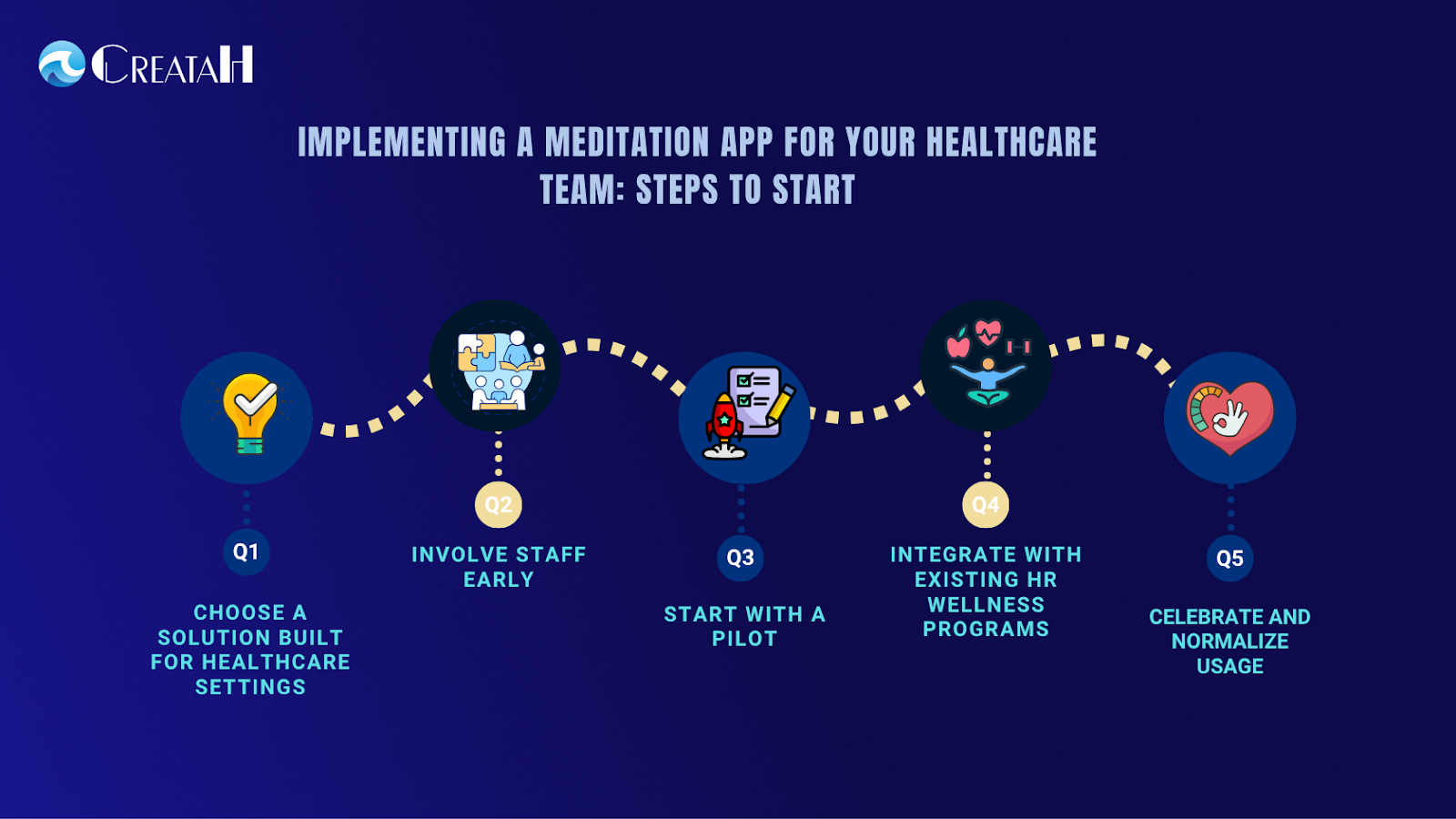
Implementing a Meditation App for Your Healthcare Team: Steps to Start
If you’re considering a meditation app for healthcare staff, here’s how to roll it out effectively:
- Choose a solution built for healthcare settings
Avoid generic apps. Look for platforms that understand the emotional nuances of healthcare work. - Involve staff early
Get input from nurses, therapists, doctors. Co-creation builds buy-in. - Start with a pilot
Roll out to one department (e.g., ER or ICU) and gather feedback. - Integrate with existing HR wellness programs
Position it as a benefit, not another task.
5 Celebrate and normalize usage
Encourage team leads to promote app check-ins during shift transitions.
Meditation Is Not a Luxury It’s a Lifeline
The healthcare industry cannot continue to turn a blind eye to the emotional wellbeing of its employees. Stress, burnout, and low morale does not equate failure it represents a systemic issue that necessitates systemic solutions.
A meditation app for healthcare professionals is not a magic cure and should not be and is not intended to be, a standalone solution. That said, it is an excellent high impact, low barrier route to cultivating calm, connection and clarity amongst overworked healthcare professionals.
At Creatah, we specialize in developing personalized wellbeing and meditation apps for healthcare organizations. Tailored shift-based user experience, therapist integrated scheduling, community mood analytics, personalized mood diaries,- are all elements that we slipped into the workflows and processes of our platforms. We are committed to serving the people who care for everyone else.
